
Clinical Intervention: Navigating Professional Dry Scalp Treatments
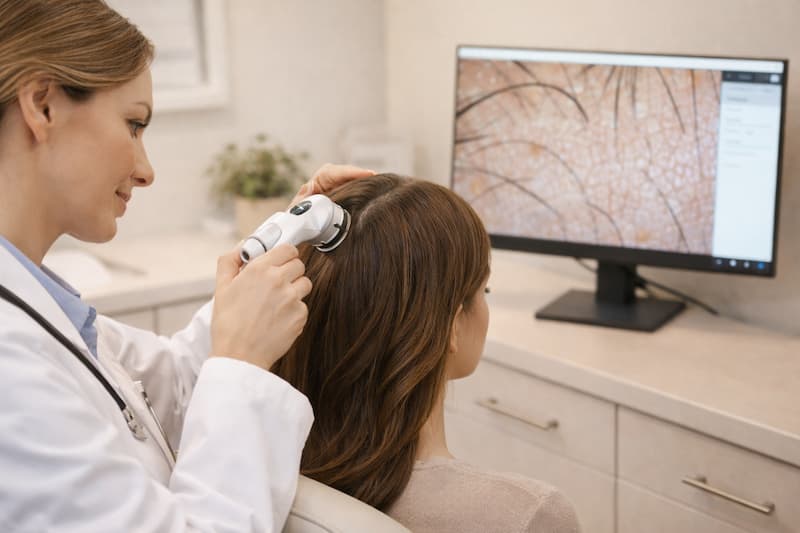
Introduction: Breaking Through the “Treatment Ceiling”
There comes a point when over-the-counter care reaches its limit. You’ve rotated shampoos, tried zinc, swapped oils yet the itch returns, steady and unresolved. Sometimes the “Invisible Fire” runs deeper than surface flakes, sustained by inflammation that a $12 bottle cannot fully extinguish. Today, we step beyond the glass ceiling of home care and examine professional dry scalp treatments from targeted prescriptions to in-office procedures designed to reset your scalp’s biological clock.
Knowing the Limits: Signs You’ve Outgrown Over-the-Counter Fixes
At a certain stage, persistence stops being discipline and starts becoming delay. If you have rotated through zinc, ketoconazole, and selenium sulfide — and redness still lingers — you may have reached the treatment-resistance wall.
This is the point where the issue shifts from cosmetic dryness to clinical inflammation. Ongoing erythema, thick plaques, or rapid relapse after washing often indicate chronic seborrheic dermatitis or another inflammatory condition rather than simple dehydration. In some cases, the pattern resembles a steroid-responsive dermatosis, meaning it improves only when prescription anti-inflammatories are introduced.
In these scenarios, a dermatologist consultation is no longer optional; it is strategic. Early medical evaluation prevents follicular stress and reduces the risk of long-term barrier damage.
If flakes persist in dry scalp despite daily washing, your barrier may be too compromised for standard retail products. That is a signal to escalate intelligently, not aggressively.
Prescription Treatments: The “Big Guns” of Professional Dry Scalp Treatments
When over-the-counter strength fails, prescription therapies provide higher concentrations and targeted mechanisms.
1. High-Potency Topical Corticosteroids
These rapidly suppress inflammatory signaling and reduce redness. However, prolonged use can thin the skin and alter barrier integrity, so rotation and supervision are essential.
2. Calcineurin Inhibitors (Elidel / Protopic)
These non-steroidal immunomodulators reduce inflammation without the atrophy risk of corticosteroids. They are often used for sensitive areas or maintenance phases.
3. Oral Antifungals
In resistant cases involving persistent Malassezia overgrowth, short courses of systemic antifungals may reset microbial balance.
OTC vs. Professional Dry Scalp Treatments
| Feature | OTC Options | Prescription Options |
|---|---|---|
| Ketoconazole Strength | 1% | 2% (Rx only) |
| Anti-Inflammatory Action | Mild, indirect | Direct, high-potency |
| Duration of Effect | Short-term control | Structured medical course |
| Risk Profile | Low, self-managed | Higher, physician-monitored |
Potency, however, comes with trade-offs. It is important to discuss safe treatments during pregnancy or breastfeeding with your physician, as many clinical-grade steroids carry systemic absorption considerations.
In-Clinic Procedures: Advanced Professional Dry Scalp Treatments
Beyond prescriptions, clinics now offer procedural interventions designed to reset the scalp environment.
Scalp Hydrafacials combine exfoliation, suction, and targeted serums to remove debris and restore hydration in a controlled setting. These professional scalp scaling techniques clear buildup without manual abrasion.
Blue Light Therapy, a form of photodynamic therapy, targets Malassezia species directly. By reducing microbial load, it decreases inflammatory signaling at the source.
Microneedling for barrier induction stimulates controlled micro-injury, encouraging collagen production and improving topical absorption. When performed professionally, it supports structured scalp rejuvenation rather than surface exfoliation.
Together, these scalp rejuvenation procedures represent the next tier of care. They are not first-line solutions; rather, they are precision tools for cases that surpass routine management.
The Professional Dry Scalp Treatments Roadmap: Finding a Specialist
Escalating care works best when it is structured. Therefore, preparation matters as much as the appointment itself.
When booking a visit, understand the distinction between a Trichologist vs. Dermatologist. A trichologist focuses on hair and scalp health from a cosmetic and structural perspective. A dermatologist, by contrast, is a medical doctor trained to diagnose inflammatory and autoimmune scalp disorders, prescribe medication, and perform procedures.
If your symptoms include persistent redness, thick plaques, or spreading patches, start with a dermatologist.
During your consultation:
- Bring a complete list of products you have used in the past 30 days.
- Note which active ingredients you tried and how long you used them.
- Document flare patterns, triggers, and relapse timelines.
- Take photos of severe episodes if symptoms fluctuate.
Avoid vague language. Instead of saying “it’s itchy,” describe intensity, duration, and visible signs. Specifics help your physician differentiate between dermatitis, fungal imbalance, psoriasis, or contact reactions.
In rare or unclear cases, your doctor may suggest a diagnostic scalp biopsy. While this sounds intimidating, it can clarify autoimmune conditions or rule out scarring disorders. Precision shortens the path to relief.
Before you panic about hair loss, read our breakdown of myths about dry scalp complications to distinguish between temporary shedding and permanent damage.
Professional Dry Scalp Treatments Are Not a Failure
Choosing medical treatment is not an admission of defeat. It is a strategic decision to extinguish inflammation so the barrier can rebuild under calmer conditions.
Natural care and clinical care are not opposites. They are phases. First, suppress the active fire. Then restore structure. Finally, maintain balance.
When inflammation stabilizes, the scalp regains its capacity to regulate oil, hydration, and microbial equilibrium. That restoration is the true objective.
Ready to see how these clinical steps integrate into your life? Check out our Day 25 guide on women’s tailored routines for the next step.
For clarity before your appointment, download the 39-page PDF strategy guide. Inside, you’ll find our “Derm-Talk” cheat sheet the exact questions that help you secure the right prescription efficiently and confidently.