
Label Mastery: What to Actually Look for in Dry Scalp Treatment Shampoos
The Marketing Trap vs. The Ingredient Deck
Step into any pharmacy and the shelves blur into promises. “Ultimate relief.” “Clinical strength.” “Natural defense.” Turn the bottle around, however, and the story often changes. Many formulas rely on heavy fragrance and strong detergents, with a token botanical added for appeal.
If you want the itch to stop, you must shift your focus from branding to composition. The front label sells emotion. The ingredient list reveals chemistry.
Selecting the right dry scalp treatment shampoos depends on understanding one core distinction: a cleanser removes debris, while a treatment targets inflammation, microbial imbalance, and barrier repair. In 2026, effective care does more than wash. It addresses the biofilm at the surface and hydrates the dermis beneath it.
Decoding the Actives: Essential Ingredients in Dry Scalp Treatment Shampoos
Not all actives solve the same problem. Some target microbes. Others break down buildup. Understanding the difference prevents overuse and underperformance.
Here are the Big Four found in most dry scalp treatment shampoos:
1. Ketoconazole
A broad-spectrum antifungal agent.
It suppresses Malassezia, the yeast linked to seborrheic dermatitis. Best for persistent redness, itching, and relapse cycles.
2. Zinc Pyrithione
Also antifungal, though milder than ketoconazole.
It reduces microbial overgrowth while offering light anti-inflammatory support. Suitable for maintenance phases.
3. Selenium Sulfide
Targets fungal proliferation and slows excessive skin cell turnover.
Effective for thicker scaling patterns, although it may be drying if overused.
4. Salicylic Acid
Not antifungal.
Instead, it has strong keratolytic properties, meaning it dissolves compacted flakes and lifts scale from the scalp surface. However, it must be paired with hydration to prevent rebound dryness.
Choosing the correct active depends on the root issue. Fungal imbalance requires antifungal agents. Dense flake accumulation requires keratolytic support. Ideally, formulas maintain surfactant balance so cleansing does not undermine barrier integrity.
While ingredients are the foundation, seeing how they perform in real conditions matters. Review our deep dive into specific dry scalp treatment products to see which formulas earned a place on our “A-List.”
Personalizing Your Wash: How to Choose Dry Scalp Treatment Shampoos for Your Hair Type
An effective treatment for a short buzz cut can devastate color-treated lengths. Clearance and preservation must coexist.
This is the Conditioning Gap. Many medicated shampoos cleanse thoroughly but leave strands porous and unprotected. Without follow-up care, hair becomes brittle even as the scalp improves.
Consider these adjustments:
- Fine hair: Choose lightweight, residue-free treatments. Pair with minimal conditioner applied mid-length only.
- Thick or curly hair: Use treatment shampoo at the roots, then follow with a deep mask to restore elasticity.
- Color-treated hair: Select color-safe formulations that avoid harsh detergents and high alcohol content.
In some cases, lipid-replenishing shampoos offer a hybrid solution by cleansing while restoring barrier oils. Application method also matters. Focus product on the scalp, not the ends.
Your hair texture dictates your approach. We’ve broken down tailored treatments for women to help you balance scalp health with hair aesthetics.
The “Avoid” List: Red Flags in Commercial Dry Scalp Treatment Shampoos
Strong marketing often hides reactive ingredients. Identifying scalp irritants prevents setbacks.
Watch for these hidden agitators:
- Sodium Lauryl Sulfate (SLS): Aggressive detergent linked to barrier disruption and potential contact dermatitis triggers in sensitive individuals.
- High-percentage denatured alcohol: Accelerates evaporation and weakens lipid structure.
- Synthetic fragrances: If “Parfum” appears in the top five ingredients, reconsider the purchase.
Sulfate-free labeling can also mislead. Some alternatives are equally stripping, which fuels confusion around sulfate-free myths. Focus on total formulation rather than a single buzzword.
Read the ingredient deck with intention. The front label sells relief. The back label reveals whether the formula protects or provokes the Invisible Fire.
Application Strategy: Making Your Dry Scalp Treatment Shampoos More Effective
Even the best formula fails if applied incorrectly. Most people rinse too quickly, washing away both active ingredients and barrier-supporting benefits. Enter the 3-Minute Rule: let the shampoo sit on your scalp for at least three minutes before rinsing to maximize contact time.
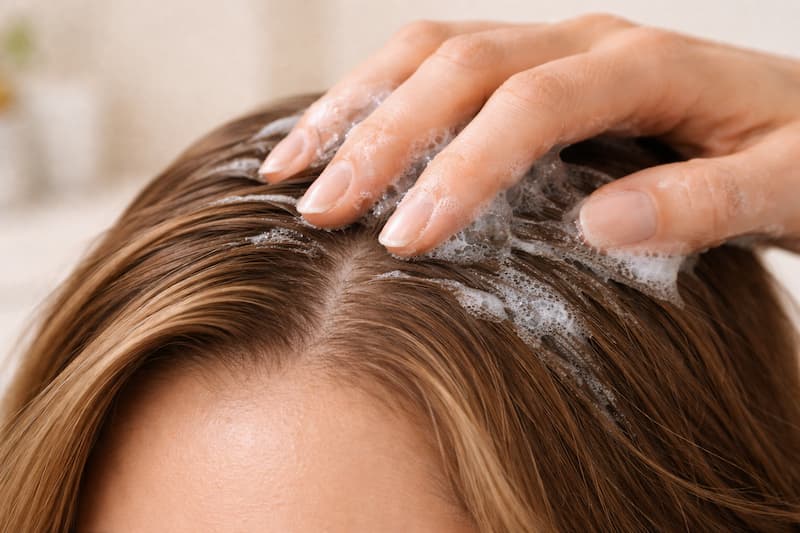
During this period, gentle scalp massage techniques help distribute the formula evenly, stimulate circulation, and improve absorption. Work in a second lather if needed — the initial wash removes surface debris, while the second ensures full emulsification of oils, product, and active agents into the barrier.
Consistency with timing and technique often outweighs brand or potency. Small adjustments in method can transform a good shampoo into a clinically effective treatment.
From Knowledge to Action
At this point, you know more about dry scalp treatment shampoos than 95% of shoppers. The goal is no longer chasing brands; it’s selecting formulas that deliver meaningful results.
Ready to see these ingredients in action? Revisit our top picks for dry scalp shampoos to read reviews and compare performance before you buy.
If the strongest bottle in the store still isn’t resolving your symptoms, it may be time to explore professional medications and clinical treatments.
For a practical reference, download the 39-page PDF strategy guide for our “Wallet-Saver” checklist the five ingredients that guarantee a product is worth your investment.