
The Barrier Defense: Strategies for Stopping Dry Scalp for Good
Breaking the “Relapse Cycle”
Most people treat dry scalp like a fire. You calm the itch, flakes fade, and you move on. Two weeks later, it’s back.
Stopping dry scalp for good means you stop chasing flakes and start fixing the cause. Relief products can quiet symptoms, but they don’t rebuild what’s broken. If your scalp barrier stays weak, the cycle repeats.
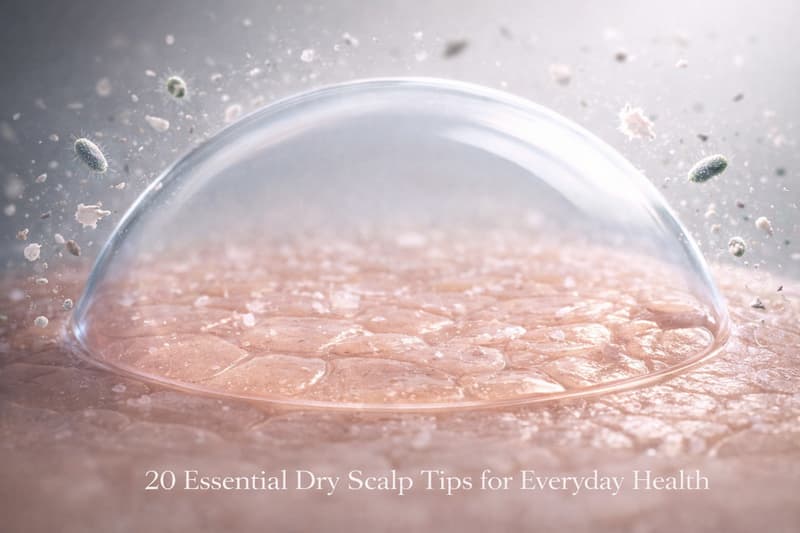
In 2026, the top 0.01% of experts focus on the acid mantle your scalp’s protective shield. This thin, slightly acidic layer controls moisture loss, blocks irritants, and keeps inflammation low. When it breaks down, transepidermal water loss rises, tightness starts, and flakes follow.
If you want lasting results, you need to strengthen the biological “fortress” when your scalp is calm not scramble when it’s flaring. That’s how you stop relapse instead of managing it.
The Biology of Resilience: The Foundation of Stopping Dry Scalp for Good
Stopping dry scalp for good begins with understanding the scalp barrier. Your outer skin layer, the stratum corneum, works like a brick wall. Skin cells act as the bricks, while lipids function as the mortar holding everything together.
When that lipid mortar weakens, gaps form. As a result, transepidermal water loss (TEWL) increases. Moisture escapes faster than your scalp can replace it. At the same time, irritants enter the barrier more easily, which triggers scalp inflammation and itching.
However, the problem rarely starts with flakes. Instead, it begins with a damaged acid mantle the thin acidic film that regulates microbes, controls moisture balance, and protects the scalp surface.
Once the acid mantle breaks down, the barrier loses resilience. Consequently, even mild cleansing or environmental exposure can push the scalp into dryness. For this reason, long-term scalp health depends on restoring lipid balance and supporting acid mantle health.
In short, stopping dry scalp for good means strengthening the structure that holds moisture in and irritants out.
Daily Prevention Routines for Stopping Dry Scalp for Good
Once the barrier is restored, daily habits determine if it stays that way. Many routines focus on washing hair; however, a healthy routine focuses on protecting the scalp.
First, control water temperature. Hot water dissolves protective lipids on contact. Therefore, use lukewarm water to reduce unnecessary moisture loss.
Next, shift toward pH-balanced washing. Cleansers that match the scalp’s natural acidity help maintain acid mantle stability. In contrast, harsh formulas raise scalp pH and weaken the barrier after every wash.
Another useful approach is the Pre-Wash Protective method. Before shampooing, apply a light hydrating layer to the scalp. This creates a temporary shield, which reduces lipid stripping during cleansing.
Finally, treat the scalp as the priority during hygiene. Hair strands tolerate stronger products; the scalp does not.
Your first line of defense is your cleanser. Choosing the right dry scalp shampoo picks allows you to clean the hair while protecting the scalp’s natural oils.
Over time, these small adjustments shift your routine from stripping the scalp to maintaining it.
Seasonal Adjustments: Stopping Dry Scalp for Good in Every Climate
Your scalp does not exist in isolation. Instead, it reacts constantly to humidity, temperature, and air quality.
During humid months, moisture remains trapped near the skin surface. As a result, the scalp usually tolerates lighter hydration routines. In dry seasons, however, indoor heating and low humidity accelerate transepidermal water loss.
Because of this shift, routines must change with the climate.
For example:
- Dry winter air: Increase hydration layers and reduce wash frequency.
- Humid summer conditions: Focus on lightweight hydration while maintaining barrier stability.
- Windy or high-altitude environments: Strengthen lipid protection to prevent rapid moisture evaporation.
Climate awareness also helps prevent unexpected flare-ups. Instead of reacting to dryness after it appears, you adjust your routine in advance.
To anticipate these changes, review the environmental causes of dry scalp and adapt hydration levels before seasonal stress reaches your scalp.
When you manage humidity, temperature, and cleansing habits together, stopping dry scalp for good becomes a predictable system rather than a temporary fix.
The 0.01% Expert Micro-Habits for Permanent Relief
Stopping dry scalp for good often comes down to small habits repeated daily. Experts rarely rely on dramatic treatments. Instead, they focus on subtle adjustments that protect the scalp barrier every day.
First, support hydration from within. Your scalp cells depend on internal water balance to maintain elasticity. When hydration drops, the scalp loses flexibility and the barrier becomes brittle. Therefore, consistent fluid intake helps maintain the moisture gradient that keeps the scalp comfortable.
Next, consider friction control during sleep. Cotton pillowcases absorb moisture and create constant drag against the scalp. Over time, this mechanical stress pulls away hydration from both the skin and hair roots. Switching to a silk or satin pillowcase reduces moisture absorption and lowers overnight friction.
In addition, introduce a five-minute daily scalp massage. Gentle circular movements stimulate blood flow while encouraging sebum stimulation. Natural sebum acts as the scalp’s built-in conditioner, reinforcing the lipid barrier and improving mechanical scalp health.
To keep the practice effective, follow three simple rules:
- Use light fingertip pressure, not nails.
- Move slowly across the entire scalp surface.
- Perform the massage on clean or lightly hydrated skin.
Individually, these habits appear minor. However, when practiced consistently, they stabilize the scalp environment and gradually reduce flare-ups.
Your 365-Day Scalp Roadmap
Stopping dry scalp for good requires long-term thinking. Quick fixes can calm symptoms; however, stable results depend on steady maintenance.
Think of scalp care as a year-round routine rather than a reaction to flare-ups. Each small action—gentle washing, barrier protection, and daily micro-habits—builds resilience across the scalp surface.
Over time, consistency strengthens the lipid barrier and supports acid mantle balance. As a result, the scalp becomes less reactive to weather shifts, product changes, and environmental stress.
Of course, prevention works best when the scalp is already stable. If you are currently dealing with severe dryness or irritation, review the guide on extremely dry scalp: how to fix it fast for immediate relief strategies. In addition, revisit the essential dry scalp tips to reinforce daily maintenance habits.
For readers who want a structured routine, download the 39-page PDF strategy guide for the “Prevention Calendar.” It outlines the weekly and monthly practices that keep the scalp barrier strong throughout the year.