
The Lifestyle Shift: How to Hydrate Your Scalp Naturally Every Day
The Difference Between “Greasy” and “Hydrated”
Most people assume a healthy scalp should feel oily. In reality, a balanced scalp feels like nothing at all. No tightness. No itch. No flakes. Just calm, flexible skin doing its job.
Learning how to hydrate your scalp naturally starts with correcting this misunderstanding. Oil does not equal hydration. Instead, true moisture comes from water inside the skin and the barrier that holds it there.
For this reason, the 0.01% experts approach scalp care differently in 2026. They look beyond topical oils and focus on daily habits that influence the barrier. Your morning coffee, hydration levels, and even shower temperature shape how your scalp holds moisture. In other words, Dermal Flooding begins long before you apply a single product.
What Hydrates the Scalp Naturally: Water vs. Lubrication
Many people confuse lubrication with hydration. However, they are not the same. Oil softens the surface. Water hydrates the cells.
To hydrate your scalp naturally, you must understand the “water-trap” mechanism. Your scalp stores moisture through Natural Moisturizing Factors (NMF) inside the stratum corneum. These molecules attract water and hold it within the skin structure.
At the same time, the lipid barrier acts like a seal. It slows transepidermal water loss (TEWL) so moisture cannot escape into the air. If this barrier weakens, water evaporates quickly. As a result, the scalp feels tight and flaky even when oil is present.
Therefore, healthy scalp care follows a simple order. First, bring water into the skin. Next, support lipid-barrier health so that water stays in place. Only then does the scalp regain flexibility and calm.
While habits form the foundation, targeted support can speed the process. Our guide on natural dry scalp treatments (Day 14) explains which ingredients act as “moisture magnets” for the dermis.
Daily Hydration Habits to Hydrate Your Scalp Naturally
Small habits shape long-term scalp hydration. Instead of relying on heavy products, the goal is to support the scalp’s natural moisture cycle.
1. The Humidity Hack
Dry air pulls water from the skin overnight. Therefore, placing a humidifier in the bedroom adds moisture back into the environment. This simple change reduces overnight dehydration, especially during colder months.
2. The 98-Degree Rule
Hot showers feel relaxing. However, high heat strips the lipid barrier and causes rapid moisture loss. Keep water close to body temperature, around 98°F. This prevents “flash-drying” of the scalp after washing.
3. The Mechanical Stir
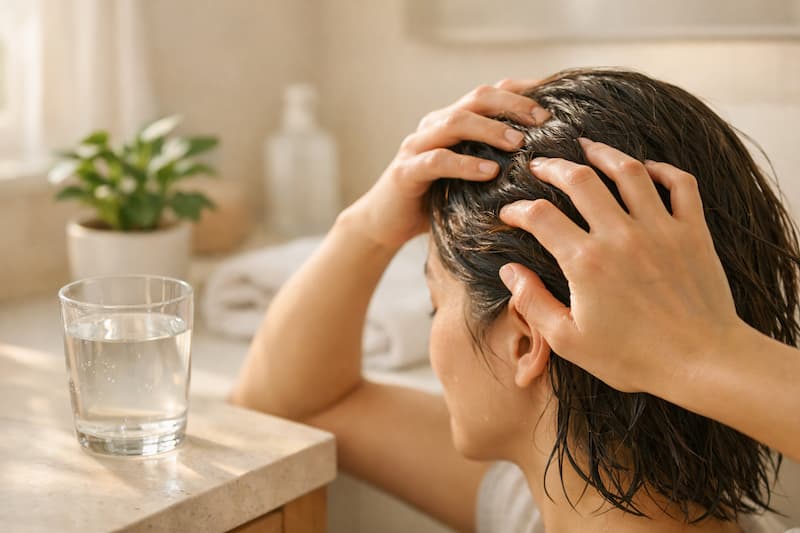
Daily scalp movement also matters. A gentle two-minute fingertip massage spreads natural sebum across the scalp surface. As a result, the skin stays flexible without heavy oils.
If you are unsure about your starting point, first review how to tell if your scalp is dehydrated (Day 4). That guide helps you identify baseline dryness before starting these daily rituals.
Internal Fuel: How to Hydrate Your Scalp Naturally from Within
External care helps. However, true hydration also starts inside the body.
Skin cells rely on water to maintain shape and flexibility. When the body lacks fluids, the scalp enters a mild drought state. In that condition, the barrier weakens and flakes appear faster.
Electrolytes play a major role here. Minerals such as sodium, potassium, and magnesium help move water into cells. Without them, drinking large amounts of plain water may not fully support cellular hydration.
Therefore, balanced nutrition becomes part of scalp care. Mineral-rich foods, adequate fluids, and stable hydration support the scalp barrier from within. Over time, this internal support reduces dryness and improves lipid-barrier health.
When internal and external hydration work together, the scalp becomes calmer, stronger, and far less reactive to environmental stress.
Common Mistakes When Trying to Hydrate Your Scalp Naturally
Many routines fail because they focus on quick fixes instead of barrier health. As a result, the scalp becomes drier even when the intention is hydration.
One common mistake involves frequent lemon rinses or vinegar soaks. These remedies can help rebalance buildup in small doses. However, daily use often backfires. Strong acids disrupt the scalp’s protective layer and weaken acid mantle protection.
Once the acid mantle breaks down, moisture escapes faster. At the same time, irritants penetrate the surface more easily. This leads to tightness, itching, and persistent flakes.
Another issue involves over-cleansing. Washing too often strips protective lipids before the scalp can rebuild them. Consequently, natural hydration cycles never stabilize.
Product timing also matters. Many people apply treatments to dry skin. Unfortunately, this limits water absorption. Instead, apply hydration products to a wet scalp so moisture can move into the cells first.
Finally, avoid alcohol-heavy toners marketed as “refreshing.” They may feel cooling at first. Yet they accelerate evaporation and weaken pH-balanced scalp care routines.
Therefore, natural hydration works best when the barrier remains intact. Protect the acid mantle first. Then support water retention through gentle, consistent habits.
Conclusion: The Roadmap to Scalp Sovereignty
To hydrate your scalp naturally, patience matters more than intensity. Short bursts of treatment rarely solve long-term dryness.
Instead, steady habits build real resilience. Lukewarm washing protects barrier lipids. Environmental moisture reduces overnight dehydration. In addition, balanced hydration from within supports the skin’s natural repair cycle.
Over time, these small decisions compound. The scalp gradually shifts from reactive to stable. Flakes become rare. Itching fades. The barrier begins to function without constant intervention.
Next, move deeper into repair strategies with our step-by-step guide to rehydrating a dry scalp . At the same time, align these habits with our prevention tips for dry scalp to maintain long-term balance.
For a structured routine, download the 39-page PDF strategy guide featuring our Daily Hydration Tracker. It outlines the exact checklist used to maintain strong, resilient scalp barriers every day.