
10 Hidden Seborrheic Dermatitis Triggers You Might Be Missing
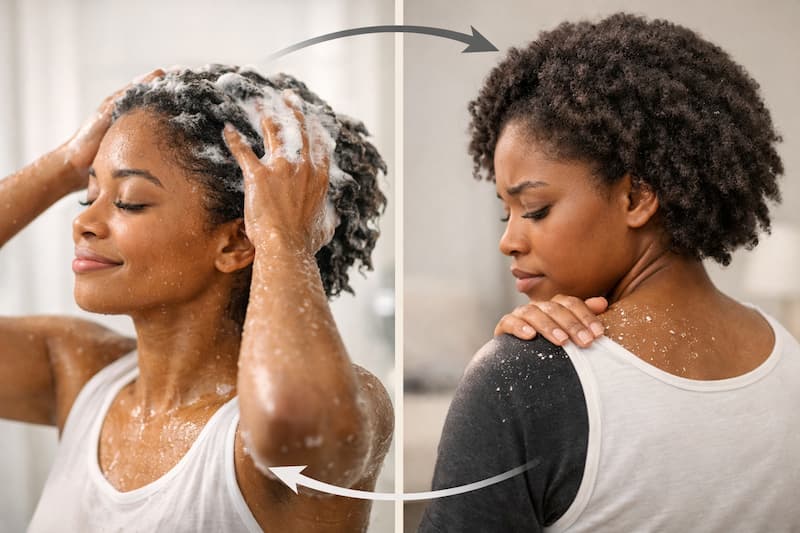
You wash your hair.
But the flakes come back.
So you try again.
Yet nothing really changes.
This feels confusing at first.
However, it’s not random.
There are hidden seborrheic dermatitis triggers keeping your scalp irritated.
And because you can’t see them, you keep repeating the same cycle.
So instead of guessing, let’s break them down one by one.
The Frustration of Unseen Flare-Ups
At first, you think it’s just dandruff.
So naturally, you treat it like dandruff.
- You wash more
- You switch shampoos
- You scrub harder
But then the flakes return.
And this keeps happening.
That’s because the real seborrheic dermatitis triggers are still active.
In other words, you’re fixing the surface, not the source.
So before adding more products, you need to understand what’s actually causing the flare-ups.
Common Environmental Seborrheic Dermatitis Triggers
1. Hard Water & Mineral Buildup
First, let’s talk about water.
It seems harmless, right?
However, hard water leaves minerals behind.
- Calcium and magnesium build up
- A thin film forms on your scalp
- Yeast gets trapped underneath
As a result, your scalp looks clean but isn’t.
2. The “Shampoo Scam” (Harsh Surfactants)
Next, consider your shampoo.
It might feel strong and effective.
But strong doesn’t always mean better.
- Harsh surfactants strip your natural oils
- Your scalp reacts by producing more oil
- Flakes return even faster
So while it feels like you’re fixing the issue, you’re actually feeding it.
3. Seasonal Humidity Shifts
Now think about the weather.
It changes your scalp more than you expect.
- Dry air → your skin cracks
- Humid air → yeast grows faster
Because of this, your scalp behaves differently across seasons.
If you ignore that, flare-ups keep coming back.
Internal Seborrheic Dermatitis Triggers You Can’t Ignore
4. The Cortisol Spike (Stress)
Stress doesn’t just affect your mood.
It changes your body too.
When cortisol rises:
- Oil production increases
- Your scalp becomes more reactive
- Inflammation gets worse
So even if your routine is perfect, stress can still trigger flakes.
5. Gut Dysbiosis
Now let’s go deeper.
Your gut and scalp are connected.
This is called the gut-skin axis.
When your gut is out of balance:
- Inflammation spreads
- Your skin reacts
- Flare-ups increase
So your scalp might actually be reacting to what’s happening inside your body.
6. High-Glycemic Diets
Next, look at your diet.
What you eat matters.
Foods high in sugar spike your insulin.
- Hormones shift
- Oil production increases
- Yeast gets more fuel
Because of this, diet becomes a hidden seborrheic dermatitis trigger.
Routine-Based Seborrheic Dermatitis Triggers
7. Infrequent Washing
You might think washing less helps.
But sometimes, it makes things worse.
- Oil builds up
- Yeast breaks it down into irritants
- Your barrier gets damaged
So instead of balance, you get more irritation.
8. Product Buildup
Now consider your styling products.
They don’t just sit on your hair.
They sit on your scalp too.
- Waxes trap dirt
- Silicones create a coating
- Yeast thrives underneath
As a result, your scalp becomes blocked.
9. Nutrient Deficiencies
Your scalp also needs support from inside.
Without key nutrients, it weakens.
Low levels of:
- Zinc
- Vitamin B6
- Vitamin D
…make your barrier fragile.
So your scalp reacts faster to triggers.
10. Compromised Lipid Barrier
Finally, let’s talk about over-cleaning.
“Squeaky clean” sounds good.
However, it’s actually harmful.
- Your natural oils get stripped
- Moisture escapes quickly
- Irritants enter easily
Because of this, your scalp becomes more sensitive.
And that sensitivity becomes a major seborrheic dermatitis trigger.
How to Neutralize Your Seborrheic Dermatitis Triggers
Step 1: Find Your Top 3
Not every trigger affects you the same way.
So start by observing patterns.
- When do flare-ups happen?
- What changed before they started?
- What makes them worse?
Focus on your top 3 triggers first.
Step 2: Switch to Bio-Compatible Care
Next, adjust your routine.
Stop stripping your scalp.
- Use gentle cleansers
- Avoid harsh chemicals
- Focus on barrier repair
This helps your scalp recover instead of react.
Step 3: Support Your Microbiome
Finally, aim for balance.
Not elimination.
- Support healthy bacteria
- Avoid over-treating
- Keep your environment stable
When balanced, your scalp becomes more resistant.
Taking Back Control
At first, your flare-ups feel random.
But now you can see the pattern.
Your seborrheic dermatitis triggers are not hidden anymore.
You just needed to connect the dots.
So instead of guessing, you can act with clarity.
- Remove what triggers your scalp
- Support what protects it
- Stay consistent over time
That’s how you break the cycle.
Not by doing more.
But by doing the right things.