
The Mask Mandate: Unlocking the Best Dry Scalp Masks for Hydration
Introduction: Why Your Scalp Needs an “Infusion,” Not a Rinse
Most shampoos stay on your scalp for less than a minute. As a result, they rinse away before delivering deep hydration. A best dry scalp mask, however, sits longer and allows moisture and lipids to absorb into the skin.
Choosing the best dry scalp mask is not about fragrance or texture. Instead, it is about forming a hydro-lipid film that restores pH balance and repairs the scalp barrier. In 2026, experts treat the best dry scalp mask as a targeted skin treatment rather than a simple beauty step.
The Biology of the Soak: The Science Behind the Best Dry Scalp Masks
The outer layer of your scalp, the Stratum Corneum, acts like a wall of bricks. When it dehydrates, the bricks shrink and gaps appear. Moisture escapes easily, causing dryness and irritation. This is known as Transepidermal Water Loss (TEWL).
A mask creates a temporary occlusive seal. This forces water-binding humectants deeper into the scalp. At the same time, oils and lipids lock the moisture in place. The combination restores the lipid barrier and improves epidermal hydration. This is why the best dry scalp masks always blend humectants with gentle occlusives.
The Kitchen Pharmacy: Formulating the Best Dry Scalp Masks at Home
Category A: The Humectant Floods (For Tightness & Dehydration)
When your scalp feels tight, the main problem is often water loss. In this case, the goal is simple. You need ingredients that pull moisture into the skin and keep it there. These are called humectants.
Humectants act like tiny magnets for water. As a result, they help restore moisture inside the scalp barrier. The following recipes focus on hydration first, then barrier comfort.
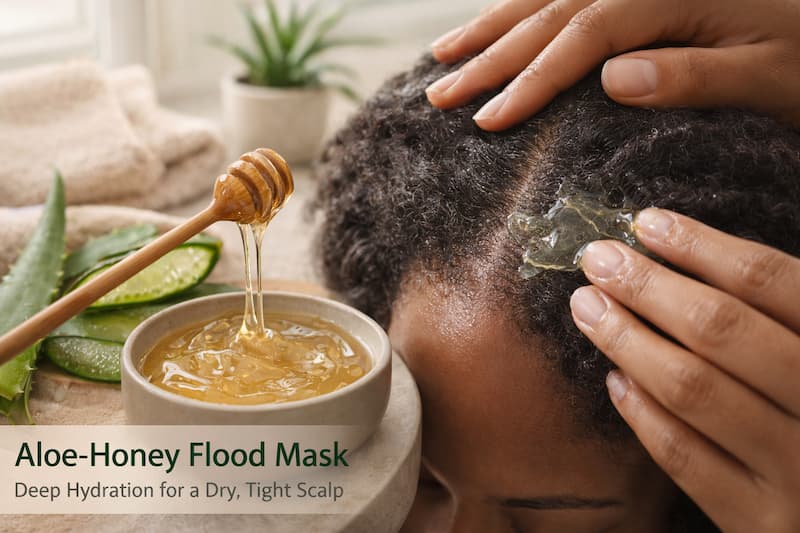
The Aloe-Honey Flood
This mask delivers strong hydration. Aloe provides water and soothing compounds. Meanwhile, honey pulls moisture toward the scalp.
Ingredients
- 3 tablespoons raw aloe gel
- 1 tablespoon Manuka honey
How it helps
- Aloe supports calm, hydrated skin.
- Honey acts as a water binder, helping the scalp hold moisture longer.
How to use
Mix the ingredients until smooth. Then apply the mixture directly to a damp scalp. Leave it on for about 15–20 minutes. Finally, rinse with lukewarm water.
The Glycerin Glow
Vegetable glycerin is one of the strongest natural humectants. It attracts water from the air and pulls it toward the skin.
However, glycerin works best when diluted. Therefore, combining it with rose water makes the mixture gentle and balanced.
Ingredients
- 1 part vegetable glycerin
- 3 parts rose water
How it helps
- Glycerin draws moisture into the scalp.
- Rose water calms irritation and adds light hydration.
How to use
Mix the two liquids in a small bowl. Then apply the mixture to a damp scalp using your fingertips. Leave it on for about 10–15 minutes before rinsing.
The Hyaluronic Kitchen Hack
Hyaluronic acid is famous for holding large amounts of water. While most people buy it in serums, you can mimic its effect with high-water foods.
Cucumber juice contains natural hydration compounds. When mixed with aloe, it forms a light moisture mask.
Ingredients
- 2 tablespoons fresh cucumber juice
- 2 tablespoons aloe gel
How it helps
- Cucumber delivers high water content.
- Aloe helps hold that moisture on the scalp.
How to use
Blend the ingredients until smooth. Then apply the mixture to the scalp and massage gently. Leave it for about 15 minutes before rinsing.
These humectant floods work best for dry, tight scalps that lack moisture. However, hydration alone is only part of the solution. After adding water to the skin, the next step is sealing it with light lipids so the moisture stays in place.
Category B: The Lipid Builders (For Flaking & Barrier Repair)
Sometimes dryness is not only about water loss. In many cases, the scalp barrier itself becomes weak. When this happens, flakes appear and the skin struggles to hold moisture.
This is where lipid builders help. Lipids are natural fats that repair the scalp barrier. They fill small gaps between skin cells and reduce moisture loss. The following recipes focus on restoring these protective fats.
The Avocado–Yogurt Repair
This mask supports both gentle exfoliation and barrier repair. Avocado adds healthy fats, while yogurt helps loosen flakes.
Ingredients
- ½ ripe avocado
- 2 tablespoons Greek yogurt
How it helps
- Avocado contains fatty acids that support the scalp barrier.
- Yogurt contains lactic acid, which softly removes dead skin buildup.
How to use
Mash the avocado until smooth. Then mix in the yogurt to form a creamy paste. Apply the mask to a damp scalp and leave it on for about 15–20 minutes. Finally, rinse with lukewarm water.
The Egg–Jojoba Reconstruction
This recipe focuses on rebuilding the scalp’s natural oil balance. Egg yolk contains lecithin, which helps smooth and nourish the skin.
Ingredients
- 1 egg yolk
- 1 tablespoon jojoba oil
How it helps
- Egg yolk supports softness and mild protein repair.
- Jojoba oil closely mimics natural sebum, which helps balance the scalp.
How to use
Whisk the egg yolk and jojoba oil together. Then apply the mixture carefully to the scalp. Leave it on for about 10–15 minutes before rinsing with cool or lukewarm water.
The Banana–Squalane Smoothie
Overripe bananas work well in scalp masks because they blend easily. They also contain nutrients that support healthy skin turnover.
Ingredients
- 1 overripe banana
- 1 teaspoon olive squalane
How it helps
- Banana contains potassium, which supports cell renewal.
- Squalane acts as a light lipid that strengthens the barrier without clogging pores.
How to use
Mash the banana until very smooth. Then mix in the squalane. Apply the mask to the scalp and massage gently. Leave it on for around 15 minutes, then rinse well.
These lipid builder masks help repair a weak scalp barrier. When used regularly, they reduce flaking and improve moisture retention. Over time, the scalp becomes calmer, smoother, and easier to maintain.
Category C: The Anti-Inflammatory Fire Extinguishers (For Itching)
Sometimes the biggest problem is not dryness. Instead, the scalp feels itchy, hot, or irritated. This happens when the skin barrier becomes inflamed. In simple terms, the scalp reacts like it has a small fire under the surface.
For this situation, calming ingredients work best. These recipes focus on soothing the skin while still adding gentle hydration.
The Oatmeal Occlusive
Oatmeal has been used for skin relief for a long time. It forms a soft coating that protects irritated skin.
Ingredients
- ¼ cup colloidal oatmeal
- Enough water to form a paste
How it helps
- Oatmeal creates a protective layer over the scalp.
- This layer works like a natural bandage that calms itching.
How to use
Mix the oatmeal with water until it forms a thick paste. Then apply the mixture to a damp scalp. Leave it on for about 15 minutes before rinsing with lukewarm water.
The Green Tea–Aloe Tincture
Green tea contains strong antioxidants. These compounds help calm irritation and reduce redness.
Ingredients
- 2 tablespoons concentrated green tea (cooled)
- 2 tablespoons aloe gel
How it helps
- Green tea helps reduce inflammation.
- Aloe soothes the scalp and adds light hydration.
How to use
Mix the ingredients in a small bowl. Then apply the liquid mixture directly to the scalp. Let it sit for 10–15 minutes before rinsing.
The Pumpkin Enzyme Refiner
Pumpkin is rich in natural enzymes and skin nutrients. These enzymes help remove buildup without harsh scrubbing.
Ingredients
- 2 tablespoons pumpkin puree
- 1 teaspoon honey
How it helps
- Pumpkin contains zinc and gentle enzymes that loosen debris.
- Honey hydrates the scalp and supports moisture balance.
How to use
Blend the pumpkin and honey until smooth. Apply the mixture to the scalp and massage lightly. Leave it on for about 15 minutes, then rinse well.
These soothing masks help calm itching and irritation. However, itching can also come from dead skin buildup, not only dryness.
For that reason, many people combine these calming masks with our DIY treatments for flakes . This clears away debris first and allows moisture treatments to work better.
The Application Protocol: Getting the Most from the Best Dry Scalp Masks
Applying a mask on dry hair is a common mistake. For best results, the scalp should be damp, not drenched.
Step 1: Warm Compress – Hold a warm towel on the scalp for 5 minutes. This softens sebum and preps the skin.
Step 2: Sectioning – Work in 1-inch sections. This ensures the mask touches the scalp, not just the hair strands.
Step 3: Massage – Gently massage each section. This increases blood flow to the follicles and improves absorption.
For precise timing and temperature tips, follow our rehydration guide to avoid flash-drying the scalp during rinsing.
The $pH$ Factor: Why the Best Dry Scalp Masks Respect the Acid Mantle
Your scalp has a natural acid mantle that protects it from irritation and moisture loss. Ideally, its $pH$ sits between 4.5 and 5.5. If your DIY mask is too alkaline, like baking soda, it will strip this protective layer instead of repairing it.
To stay safe, always add a stabilizing agent. Diluted apple cider vinegar or Aloe keeps the $pH$ in the right zone. This preserves the barrier while allowing your humectants and lipids to do their job.
Troubleshooting Your DIY Masks: Common Mistakes
The Oil-Only Trap – Using just coconut or other heavy oils can actually make your scalp drier. Oils block moisture from getting in, so the scalp stays thirsty.
The Temperature Error – Rinsing with hot water “cooks” the mask into your hair. It strips the newly applied lipids and humectants, undoing your work.
Always apply oils after water-based humectants. Rinse with lukewarm water to protect your barrier.
Conclusion: Graduation to Scalp Sovereignty
The best dry scalp masks are more than a quick fix. They are a weekly commitment to your scalp’s health. You move from reacting to flakes to preventing them before they start.
Hormones, seasons, and lifestyle can change your scalp’s needs. For personalized guidance, check our dry scalp care guide for women .
For detailed recipes, measurements, and seasonal adjustments, download the 39-page PDF strategy guide for our “Mask Matrix”. This gives you the exact formula for every hair type and condition.