
The Follicle Audit: Can Dry Scalp Cause Hair Loss or Balding?
Introduction: The Anxiety of the Flake
White flakes on your shoulder can trigger instant worry. Your eyes move straight to the mirror, and the next thing you check is your hairline. That reaction is normal. Many people immediately ask the same question: can dry scalp cause hair loss, or is it only a small surface problem?
At first glance, flakes may look harmless. However, they often signal irritation happening on the skin that supports your hair. In this guide, you will learn what is actually happening on your scalp and how it connects to hair retention. Instead of reacting with panic, you will understand the biology behind flakes and what your scalp is trying to tell you.
Does Dry Scalp Lead to Hair Loss? The Direct vs. Indirect Link
Many people ask the same question: can dry scalp cause hair loss? The short clinical answer is simple. Directly, it rarely does. Indirectly, it absolutely can.
First, understand how hair actually grows. Each strand comes from a tiny structure called a follicle. Inside that follicle sits the hair bulb, which controls growth. Dry skin alone usually does not damage this bulb. Therefore, dryness by itself rarely stops hair from growing.
However, problems start when dryness becomes chronic. Over time, a dry scalp creates irritation and low-level inflammation. Dermatologists sometimes describe this irritation as a constant background stress on the skin. As a result, the follicular environment becomes unstable.
Next comes the mechanical side of the problem. A dry scalp often feels itchy. When itching begins, scratching usually follows. Repeated scratching creates mechanical shedding, where hairs fall out earlier than they should.
This process can lead to a condition called Telogen Effluvium. In simple terms, more hair enters the resting phase of the growth cycle at the same time. Consequently, you may notice extra strands on your pillow, in the shower, or on your brush. The key point is that this shedding is typically temporary once the scalp environment improves.
If you want to understand whether your shedding signals a deeper issue, it helps to look at the bigger picture. Revisit our guide on what dry scalp is a symptom of. That resource helps you rule out possible triggers like hormonal imbalance or autoimmune reactions.
When you control dryness and inflammation, the follicle environment stabilizes. As a result, the scalp returns to its normal hair growth rhythm.
Myth-Busting: Can Dry Scalp Cause Hair Loss Through “Clogged” Pores?
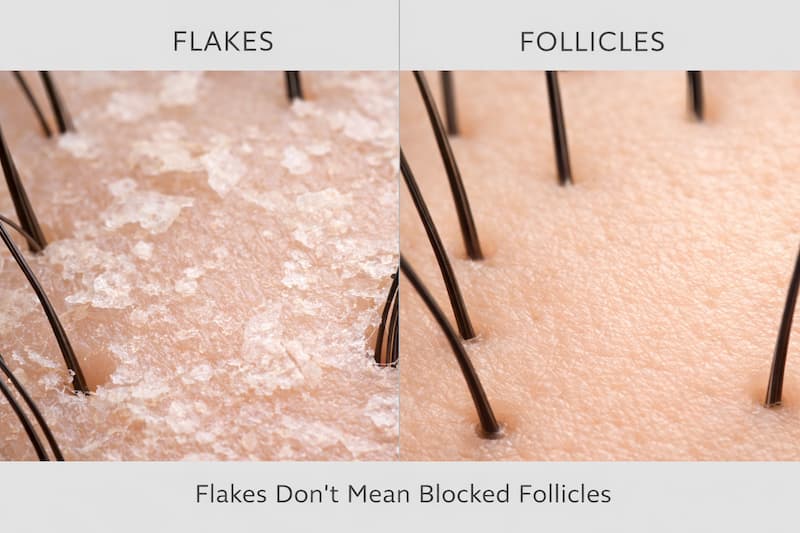
A common myth says that flakes and buildup clog hair pores and suffocate the follicle. According to this belief, dry scalp blocks hair growth the same way dirt blocks a pipe.
In reality, hair follicles are much tougher than that. A few dry skin cells sitting on the surface cannot stop a hair from growing. Hair continues to push through the skin even when flakes are present.
So why do people sometimes link flakes to hair loss? The real issue is inflammation, not blockage. When irritation becomes constant, the scalp activates an immune response. Over time, this process can reduce blood flow around the follicle.
Reduced circulation may gradually shrink the follicle, a process called follicular miniaturization. Smaller follicles produce thinner strands. Eventually, hair growth weakens.
It is also important to separate two different scalp conditions. Seborrheic dermatitis and simple dry scalp are often confused.
- Seborrheic dermatitis involves yeast overgrowth, inflammation, and excess oil. This condition can contribute to hair shedding if it becomes severe.
- Dry scalp, on the other hand, simply means the skin lacks moisture. It causes flakes and itching but rarely damages follicles directly.
Another factor is sebum oxidation. Natural scalp oils can break down when exposed to air and microbes. This breakdown sometimes worsens irritation, especially when the scalp barrier is already weak.
Understanding the difference between dermatitis vs. dryness helps you treat the correct problem. Once the inflammation settles, the follicle can return to its normal growth cycle.
Protecting Hair from Dry Scalp: The “Traction and Trauma” Factor
Dry scalp does not usually pull hair out by itself. However, the itching it causes can start a chain reaction that leads to hair damage.
First comes the itch. Then comes scratching. Unfortunately, repeated scratching creates tiny injuries in the scalp. These injuries are known as micro-fissures, which are small cracks in the skin barrier.
Next, the hair shaft becomes vulnerable. When nails drag across the scalp, they can loosen strands at the root or weaken the hair fiber. This leads to mechanical breakage, where hair snaps or sheds earlier than it should.
In some cases, constant pulling and scratching may increase the risk of traction alopecia. This condition happens when repeated tension damages the follicle over time. Although traction alopecia is usually linked to tight hairstyles, aggressive scratching can create similar stress on the roots.
The real solution focuses on stopping the itch before it begins. When the scalp stays calm and hydrated, the itch-scratch cycle never starts. As a result, both the skin barrier and the hair shaft stay protected.
Long-term hair retention always begins with scalp health. A calm scalp creates the best environment for strong follicles and steady growth. For continued protection, review our guide on dry scalp prevention . Preventing dryness today helps keep your follicles stable and your hair growth cycle undisturbed tomorrow.
H2: The Scalp–Hair Growth Connection: Why Dryness Slows Your Progress
1. H3: The Soil Metaphor: Why Your Scalp Environment Dictates Hair Health
Hair growth depends heavily on the condition of your scalp. Think of your scalp like soil in a garden. When the soil stays healthy and balanced, plants grow well. Similarly, hair grows best when the scalp environment supports it. However, dryness changes this environment.
2. H3: Micro-Circulation: How Tight Skin Constricts the Hair Bulb
When the scalp loses moisture, the skin becomes tight and less flexible. As a result, the tiny blood vessels under the skin experience pressure. This pressure reduces micro-circulation, which means fewer nutrients reach the hair bulb.
Hair bulbs rely on a steady supply of oxygen, minerals, and proteins. These nutrients travel through the bloodstream. Therefore, when circulation slows, the hair growth process also slows. The hair growth cycle still continues, but it may produce weaker strands or slower regrowth.
3. H3: Dermal Elasticity: The Secret to Nutrient Delivery
Experts often talk about something called Dermal Elasticity. This term simply describes how flexible and hydrated the skin is. Healthy scalp skin stretches and moves easily. In contrast, dry skin feels stiff and tight.
Why does this matter? Flexible skin allows blood vessels to expand normally. Consequently, nutrients can flow freely to the follicle. Over time, this supports stronger hair production. In simple terms, hydrated skin creates better “soil” for hair to grow.
4. H3: From Hair Shaft to Hair Foundation: A Paradigm Shift
This idea represents a small but powerful insight about scalp care. Many people focus only on shampoos or oils for the hair shaft. Meanwhile, the scalp itself often gets ignored. Yet the scalp is where every strand begins.
5. H3: The Result of Hydration: Stronger Strands and Active Follicles
When you improve hydration, you support dermal elasticity and circulation at the same time. As a result, the follicle receives the resources it needs to stay active. Strong follicles produce stronger strands, which helps your hair grow at its natural pace.
In other words, treating dryness is not only about stopping flakes. It also supports the foundation of the entire hair growth cycle. When the scalp stays flexible and nourished, your hair has a much better chance to grow healthy and strong.
The Self-Diagnosis: Is it Dryness or Male/Female Pattern Balding?
Seeing hair on your pillow or brush can feel scary. However, before you panic, you need to figure out what type of hair loss you are dealing with. In most cases, the difference comes down to temporary shedding or permanent thinning.
Temporary shedding often happens when the scalp becomes irritated or dry. On the other hand, permanent thinning usually links to androgenetic hair loss, which involves genetics and hormones. Therefore, understanding the signs helps you respond in the right way.
Dermatologists often look at a few simple clues. These clues reveal if the problem comes from dryness and irritation or from follicular miniaturization, where the hair follicle slowly shrinks over time.
Below is a simple audit you can use to examine your own scalp.
The Symptom Audit: Shedding vs. Thinning
| Feature | Temporary Shedding (Dry Scalp Link) | Permanent Thinning (Androgenetic) |
|---|---|---|
| Root Appearance | Hair falls out with a small white bulb at the end. This bulb is called a telogen club, which means the hair finished its normal cycle. | Hair strands become thin, soft, and almost transparent. This change shows miniaturization of the follicle. |
| Pattern | Hair falls from many areas across the scalp. Shedding looks diffuse, meaning it spreads evenly. | Hair loss appears in specific areas. It often begins at the temples, crown, or part line. |
| Scalp Sensation | The scalp may feel tight, itchy, or slightly burning. These signs point to irritation, sometimes called the Invisible Fire. | The scalp usually feels normal. In most cases, there is no itching or surface irritation. |
| Regrowth | New hairs begin growing once the scalp barrier recovers and hydration improves. | New hairs appear thinner and shorter than before. Over time, growth becomes weaker. |
| Primary Cause | Often triggered by scratching, dryness, or a pH imbalance on the scalp. | Mostly caused by genetics and hormone sensitivity, especially to DHT. |
This quick check helps you understand what your scalp may be experiencing. If shedding appears evenly across the scalp and comes with itching or dryness, the issue often relates to temporary irritation. Fortunately, this type of shedding usually improves once the scalp barrier heals.
However, if thinning follows a clear pattern and the hairs become finer over time, the cause may be hormonal. In that situation, professional guidance can help you manage the condition early.
Understanding the difference gives you clarity. Once you know what type of hair change you are facing, you can choose the right path to protect your scalp and support healthy hair growth.
Conclusion: Scalp Health is the Foundation of Hair Wealth
By now, you understand the real answer to the question many people ask: can dry scalp cause hair loss. In most cases, dryness alone does not permanently destroy hair follicles. However, a chronically dry scalp still creates a weak foundation for healthy hair growth.
Over time, constant dryness leads to irritation, scratching, and inflammation. As a result, the scalp environment becomes unstable. Hair may begin to shed more easily, and strands may grow weaker than before. Therefore, while dryness may not directly cause permanent hair loss, it can still contribute to thinning if it continues for long periods.
Think of the scalp as the base that supports every strand. When that base stays hydrated and balanced, follicles receive the nutrients and oxygen they need. Consequently, the hair growth cycle runs smoothly. On the other hand, when the scalp barrier breaks down, the follicles face constant stress.
If you also deal with hereditary hair concerns, the situation can become more complex. Genetics and hormones, especially DHT, may interact with dryness and irritation. For readers facing this combination, our guide on men’s dry scalp treatment (Day 26) explains how hormone sensitivity and hydration affect the same scalp environment.
Next, we move from understanding the problem to fixing it. Our Starter Guide , where you will learn the first practical steps to calm irritation and begin repairing your scalp barrier.
For readers who want a full system, you can also download the 39-page PDF strategy guide for the Follicle Rescue Matrix. This guide outlines the exact steps designed to help reduce shedding within 14 days while restoring a healthier scalp environment.
Healthy hair begins with healthy skin. When you protect and hydrate your scalp, you give every follicle the support it needs to grow stronger over time.