
When Gentle Products Aren’t Enough: Understanding Contact Dermatitis on the Scalp
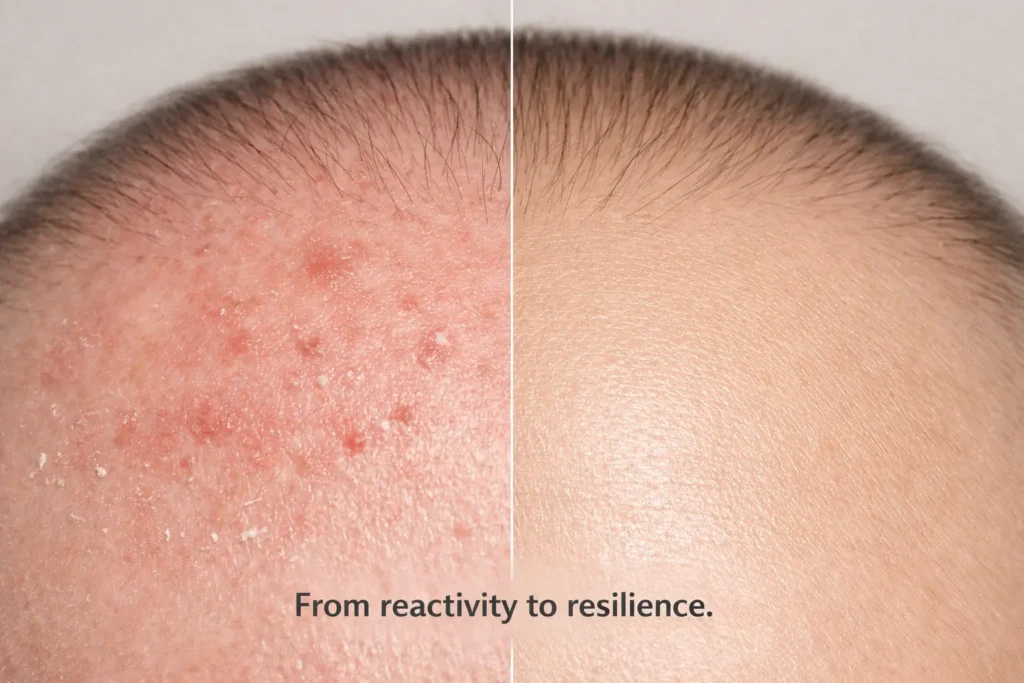
Most people think switching to a “natural” shampoo solves all scalp issues. Yet, itching often worsens. This is a classic sign of Contact Dermatitis on the Scalp.
It’s not just dry skin. It’s an immune system overreaction. Your scalp reacts to hidden chemicals in products. Today, we’ll explore how to identify the triggers and protect your scalp using principles from a Day 2 product audit.
Understanding the signs is the first step to reclaiming control.
Identifying the Symptoms of Contact Dermatitis on the Scalp
Contact Dermatitis can be tricky to spot. It often mimics other scalp conditions.
Burning Sensation – Unlike dandruff, which flakes, contact dermatitis feels like a localized chemical burn.
Delayed Onset – Allergic reactions usually appear 24–72 hours after exposure. This makes the culprit hard to track.
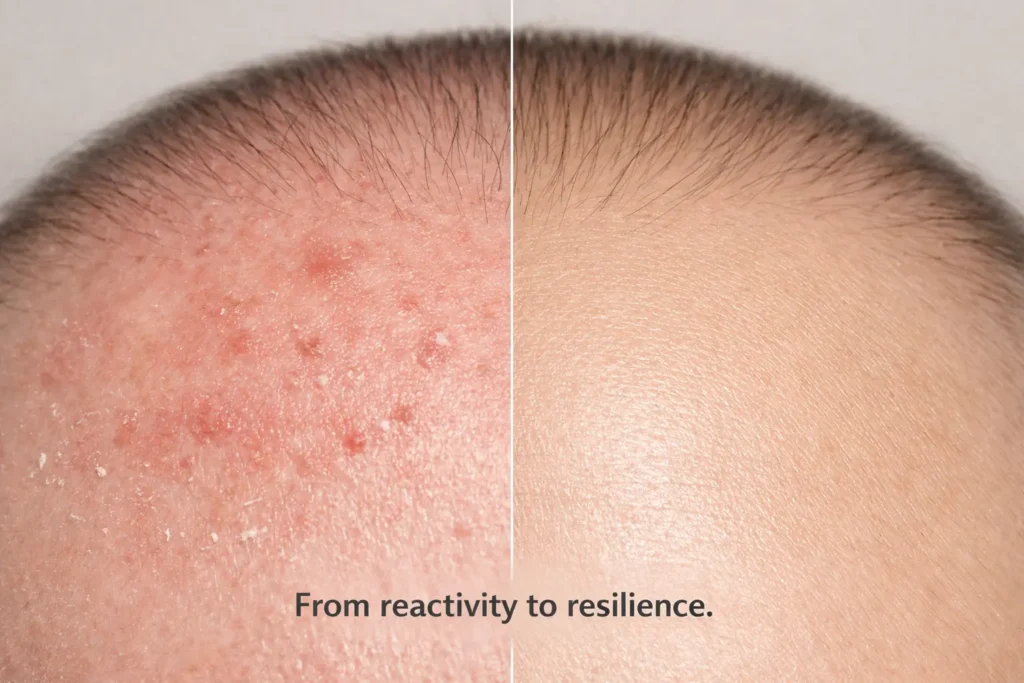
Visual Signs – Look for intense redness, “weeping” skin, or small fluid-filled bumps.
Tip: Compare with dandruff. Flakes are oily and dry in dandruff. In dermatitis, the skin itself reacts.
The Hidden Culprits of Contact Dermatitis on the Scalp
Many products hide irritants behind “gentle” labels.
Preservative Paradox – Methylisothiazolinone (MI) and Methylchloroisothiazolinone (MCI) are common. They keep products shelf-stable. Yet, they are leading causes of Contact Dermatitis on the Scalp.
Fragrance Trap – Natural fragrance is not always safe. Essential oils and phthalates can trigger immune reactions.
Before buying more products, audit for preservatives to see if hidden chemicals are the cause.
How to Prevent Contact Dermatitis on the Scalp with a Product Audit
Prevention starts with testing.
48-Hour Patch Test – Apply a diluted product sample to your inner arm. Watch for redness, itching, or swelling.
Elimination Method – Day 1’s water-only rinse acts as a clinical baseline. It tells you how your scalp reacts without chemicals.
Checklist Defense – Scan products for sulfates, synthetic scents, and harsh biocides.
Testing is only half the battle. You also need to test your products for pH and barrier safety to avoid further damage.
Recovery and Barrier Restoration
Once you remove allergens, the barrier must rebuild.
Brick-and-Mortar Analogy – Your scalp cells are bricks. Lipids and ceramides are mortar. Without them, the wall is weak.
Healing Ingredients – Use Niacinamide to calm inflammation. Allantoin helps soothe and repair the skin.
Routine Tip – Apply serums on slightly damp scalp to increase absorption. Massage gently.
Conclusion: Reclaiming Control of Your Scalp Health
Contact Dermatitis on the Scalp is your immune system sending a warning. Ignoring it can prolong irritation.
Listening to your scalp allows you to heal safely.
“Don’t play detective alone. Use our pre-built Product Audit Checklist included when you download the full 5-day scalp reset guide for step-by-step relief and stop the cycle of reactivity today.”