
The Nutritional Audit: Diet and Dry Scalp Foods That Help or Hurt
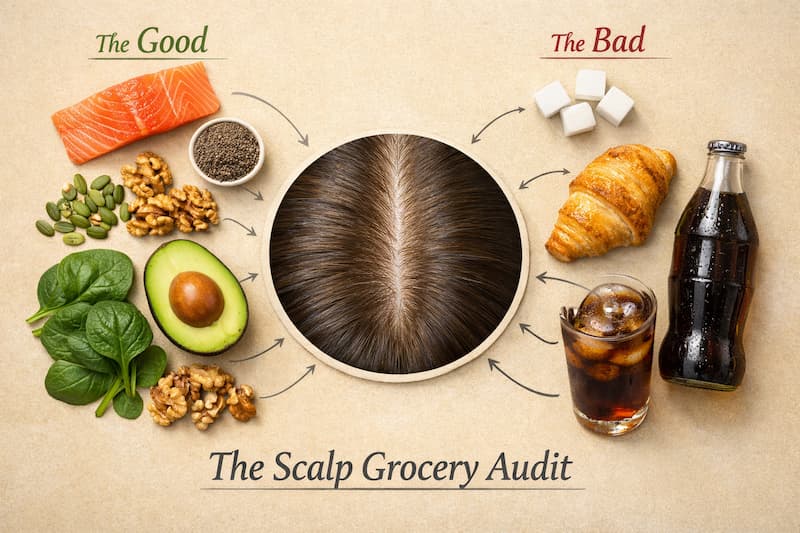
Introduction: The Internal “Dermal Drought”
You can cover your scalp with oils and serums. However, the problem may start deeper inside the body. If your internal nutrition is weak, your scalp may still feel dry.
Think of your skin like soil in a garden. When the soil lacks nutrients, the plants struggle to grow. In the same way, your scalp struggles when it lacks the right building blocks.
This is where diet and dry scalp become connected. The foods you eat help your body create the lipids that protect the skin barrier. Without those lipids, moisture escapes quickly.
As a result, the scalp may feel tight, itchy, and flaky.
Therefore, fixing dryness is not only about what you apply to your hair. Instead, it also depends on what you feed your body.
When we study diet and dry scalp, we focus on nutrients that rebuild the scalp’s natural lipid shield. Once those nutrients improve, the skin can hold moisture more easily.
The Bio-Link: How Your Diet and Dry Scalp Connection Works
Your scalp is not separate from the rest of your body. Instead, it depends on nutrients from your daily meals. When those nutrients are missing, the skin barrier becomes weak.
This is why the diet and dry scalp connection matters. The scalp needs specific nutrients to build strong skin cells and healthy oils. Without them, the barrier begins to crack and lose moisture.
As a result, dryness, flakes, and itching may appear.
The Lipid Foundation
First, the scalp needs fats to stay flexible. These fats are called essential fatty acids, especially Omega-3.
Think of your scalp like a brick wall. The skin cells are the bricks. However, the lipids act as the mortar that holds everything together.
Omega-3 fatty acids help create this mortar. They sit between skin cells and lock moisture inside the skin.
However, when your diet lacks these healthy fats, the mortar becomes weak. Small gaps begin to form between the skin cells.
As a result, water escapes through a process called Transepidermal Water Loss (TEWL). Soon after, the scalp feels tight, dry, and irritated.
Therefore, foods like fatty fish, walnuts, chia seeds, and flaxseeds can support the lipid layer. Over time, the barrier becomes stronger and holds moisture better.
Vitamin A and Sebum Synthesis
Next, your scalp needs natural oils to stay soft. These oils are called sebum.
Sebum works like a protective shield. It coats the scalp and prevents the skin from drying out.
However, the body needs Vitamin A to produce sebum properly. This process is known as sebum synthesis.
When Vitamin A levels are low, the oil glands slow down. As a result, the scalp may become extremely dry.
At the same time, the skin cell cycle becomes unbalanced. New cells form too quickly but do not shed properly. This process is called keratinization.
Consequently, dry flakes begin to appear on the scalp.
Good sources of Vitamin A include carrots, sweet potatoes, spinach, and eggs. These foods support healthy oil production and balanced skin renewal.
Therefore, when people study the link between diet and dry scalp, they often find the same pattern. Poor nutrition weakens the barrier, while balanced nutrients help the scalp repair itself.
Foods That Hydrate the Scalp Naturally: The “Sovereignty List”
Your scalp needs more than shampoo and oils. Instead, it also needs the right foods every day. These foods support dermal hydration from the inside.
This is where the diet and dry scalp connection becomes clear. When the body receives the right nutrients, the scalp can hold moisture better.
As a result, dryness, irritation, and flakes slowly reduce.
Fatty Fish and Walnuts
First, your scalp needs healthy fats. These fats help repair the skin barrier and calm irritation.
Fatty fish such as salmon, sardines, and mackerel contain high levels of Omega-3 fatty acids. These nutrients help reduce inflammation in the skin.
Because of this, many dermatologists call Omega-3s “internal moisturizers.”
Walnuts also provide strong Omega-3 support. In addition, they contain minerals that help skin cells stay flexible.
When the body receives enough Omega-3 fats, the scalp barrier becomes stronger. Consequently, moisture stays inside the skin longer.
At the same time, Omega-3 nutrients help calm the “Invisible Fire.” This means less redness, less itching, and fewer dry flakes.
Avocados and Vitamin E
Next, the scalp needs protection from damage. This damage is called oxidative stress.
Oxidative stress happens when harmful molecules attack skin cells. Over time, this weakens the scalp barrier.
However, foods rich in Vitamin E help protect the skin.
Avocados are one of the best examples. They contain healthy fats and strong antioxidant nutrients.
Because of this, they help shield scalp cells from oxidative stress. At the same time, they support smooth and flexible skin tissue.
As a result, the scalp stays hydrated and less reactive.
Other Vitamin E foods include almonds, sunflower seeds, and spinach. These foods help protect the scalp’s lipid barrier from daily stress.
Finally, remember that nutrition works best with good scalp habits. Therefore, pair these foods with external routines that hydrate the scalp naturally.
For example, cold rinsing and gentle washing can help lock moisture into the skin. You can explore these habits in our guide on hydrate scalp naturally routines.
The Scalp-Nutrient Density Matrix: 7 Power Foods for Barrier Repair
To move past the Dermal Drought, your diet and dry scalp strategy must focus on nutrient-dense foods. These foods help rebuild the outer skin layer called the stratum corneum.
Topical oils can help on the surface. However, they cannot repair the barrier alone.
The scalp must receive nutrients through the bloodstream first. Otherwise, oils stay on the surface and never become part of the skin structure.
Because of this, real scalp repair begins in the kitchen.
Below are seven foods that support scalp barrier recovery.
| Food Source | Primary Nutrient | Scalp Benefit | Missing Symptom |
|---|---|---|---|
| Wild Salmon | Omega-3 fatty acids | Lubricates follicles and calms inflammation | Brittle hair and tight scalp |
| Walnuts | Alpha-linolenic acid | Strengthens the lipid barrier and slows water loss | Powder-like flakes |
| Avocados | Vitamin E and healthy fats | Protects scalp oils from oxidative stress | Sensitive “hot spot” areas |
| Pumpkin Seeds | Zinc | Supports keratin production and skin turnover | Slow hair growth and itching |
| Sweet Potatoes | Beta-carotene (Vitamin A) | Helps regulate sebum production | Dull, dry scalp |
| Spinach | Iron and folate | Improves blood flow to hair follicles | Thinning hair and cool scalp |
| Chia Seeds | Fiber and Omega fats | Stabilizes blood sugar and reduces inflammation | Flare-ups after sugary meals |
Omega-3 Foods That Calm the Scalp Barrier
Fatty fish such as salmon supply Omega-3 fatty acids. These fats help calm inflammation inside the skin.
Because of this, they improve the scalp barrier and support dermal hydration.
Walnuts also provide Omega-based fats called alpha-linolenic acid. This nutrient works like mortar between skin cells.
As a result, water stays inside the scalp longer and dryness reduces.
Antioxidant Foods That Protect Scalp Oils
Avocados help protect the scalp barrier from damage. They contain Vitamin E and protective fats.
Vitamin E shields scalp oils from oxidative stress. When oils remain stable, the scalp barrier stays flexible and hydrated.
Without this protection, scalp oils can break down quickly. This leads to irritation and sensitive hot spots.
Mineral Foods That Support Hair and Skin Repair
Pumpkin seeds provide high levels of zinc. Zinc helps the body produce keratin, the protein that forms hair and skin tissue.
This mineral also regulates healthy skin cell turnover. Because of this, the scalp sheds dead skin in a controlled way instead of forming thick flakes.
Spinach also helps scalp repair. It contains iron and folate, which improve circulation.
Better blood flow delivers oxygen and nutrients to the hair follicle. As a result, the scalp environment becomes healthier for hair growth.
Metabolic Foods That Reduce Inflammation
Sweet potatoes supply beta-carotene, which the body converts into Vitamin A.
Vitamin A helps regulate the sebum cycle, which controls natural scalp oil production.
Balanced oil production prevents dryness and dull scalp texture.
Chia seeds support the scalp in another way. Their fiber helps stabilize blood sugar levels.
When blood sugar stays stable, the body produces fewer inflammatory spikes.
Consequently, the scalp experiences fewer sudden irritation flare-ups.
Together, these foods strengthen the diet and dry scalp connection. Over time, they help rebuild a hydrated, flexible scalp barrier from the inside out.
Why Bio-Availability Matters
However, eating these foods once will not change your scalp overnight.
Your body sends nutrients to vital organs first. Therefore, the scalp often receives nutrients last.
Because of this, consistency matters.
Most skin cells take about 21 to 28 days to renew. During this time, your body slowly builds stronger skin tissue.
Over several weeks, the scalp barrier becomes more flexible and hydrated.
At the same time, the quality of sebum improves. This means your scalp oil becomes more protective instead of evaporating quickly.
In other words, you are not simply producing more oil. Instead, you are producing better oil.
Finally, remember that nutrition works best with external care. Therefore, combine this diet and dry scalp strategy with habits that hydrate the scalp naturally.
For example, scalp massage and cold rinsing can help nutrients move toward the follicles. These practices are explained in our hydrate scalp naturally (Day 15) guide.
Foods That Hurt: The Savage Itch-Triggers in Your Kitchen
Some foods help the scalp heal. However, other foods quietly make dryness worse.
This is why the diet and dry scalp link matters. The wrong foods can trigger irritation, inflammation, and dehydration.
Over time, these triggers weaken the scalp barrier.
The Insulin Spike
First, refined sugar can damage scalp balance.
Foods with a high glycemic index enter the bloodstream quickly. Examples include candy, soda, pastries, and white bread.
Because these foods digest rapidly, blood sugar rises very fast. The body then releases insulin to control that spike.
However, frequent insulin spikes create systemic inflammation in the body.
Inflammation does not stay in one place. Instead, it can appear in the skin, including the scalp.
As a result, the scalp may feel hotter, itchier, and more sensitive.
In addition, sugar-driven inflammation can disrupt oil production. This imbalance often leads to dryness followed by irritation.
Therefore, frequent sugar intake may trigger sudden scalp flare-ups.
The Dehydration Loop
Next, caffeine can affect scalp hydration.
Coffee and energy drinks act as diuretics. This means they increase fluid loss through urination.
Because of this, the body loses water faster than usual.
Over time, this creates diuretic dehydration.
When the body lacks water, the skin barrier becomes dry. The scalp may feel tight or flaky as moisture escapes.
This effect becomes stronger when caffeine replaces water in the daily routine.
For example, drinking several cups of coffee without hydration support can slowly weaken the scalp barrier.
As a result, dryness and itching may appear even if you use good hair products.
Therefore, balance matters. Moderate caffeine intake while increasing water-rich foods helps protect scalp hydration.
Sample Meal Plan: One Day of Scalp-First Nutrition
A strong scalp starts with nutrient-dense meals. Each meal should supply the building blocks the skin barrier needs.
This simple plan supports the diet and dry scalp repair process throughout the day.
The Rescue Breakfast
Start the morning with a hydration-focused meal.
Chia seeds are rich in Omega fats and fiber. These nutrients support scalp barrier repair.
Add fresh berries such as blueberries or strawberries. Berries contain strong antioxidants that protect scalp cells.
Together, this combination forms an antioxidant-rich diet foundation.
Because antioxidants fight cellular stress, the scalp remains calmer and more balanced.
The Follicle-Fuel Lunch
For lunch, focus on minerals and healthy fats.
Wild-caught salmon supplies Omega-3 fatty acids. These nutrients reduce inflammation and support dermal hydration.
Next, add pumpkin seeds to the meal. Pumpkin seeds contain zinc for scalp health, which supports keratin production and skin repair.
You can pair this meal with leafy greens or spinach. These vegetables add iron and folate that support blood circulation to hair follicles.
As a result, nutrients travel more easily to the scalp.
This type of meal also improves overall nutrient density in the diet.
Over time, these nutrients strengthen the scalp barrier and reduce dryness.
Finally, remember that this meal structure supports a larger prevention strategy. For deeper guidance, explore our prevention strategies for dehydrated scalp to strengthen long-term scalp hydration.
Supplements for Scalp Sovereignty: The Clinical Truth
Food should always come first. However, supplements can support the diet and dry scalp repair process.
They help fill nutrient gaps that daily meals sometimes miss.
Still, not every supplement improves scalp health. The body only absorbs nutrients that are biologically available.
This concept is called mineral bio-availability. In simple terms, it means how well your body can actually use a nutrient.
Because of this, targeted trichology supplements can help support scalp repair.
Zinc and Selenium: The “Mineral Defense”
Zinc is one of the most important minerals for scalp health.
First, it helps regulate oil production in the sebaceous glands. Balanced oil helps prevent both dryness and irritation.
Second, zinc supports keratin production. Keratin is the structural protein that forms hair and skin tissue.
When zinc levels are low, the scalp may struggle to repair itself. As a result, flaking and itching can persist.
Selenium supports the scalp in another way. It helps control oxidative stress inside skin cells.
Oxidative stress weakens the scalp barrier over time. However, selenium acts like a shield against that damage.
Together, zinc and selenium create a strong mineral defense against chronic flaking.
Still, supplements should support a healthy diet. They should not replace whole foods.
Collagen Synthesis: Can Supplements Repair the Barrier?
Many people take collagen supplements for skin and hair health.
Collagen is a protein that helps support skin structure. It also helps maintain elasticity in the dermis layer.
However, collagen supplements do not travel directly to the scalp.
Instead, the body breaks collagen into amino acids during digestion.
These amino acids then circulate through the bloodstream. The body decides where to use them.
Because of this, collagen supplements may support overall skin health. Yet their effect depends on diet quality and nutrient balance.
For example, collagen works better when combined with vitamin C, zinc, and protein-rich foods.
In short, collagen supplements can support scalp repair. Still, they work best as part of a full diet and dry scalp strategy.
Conclusion: The Long-Game of Scalp Nutrition
Scalp health is not fixed in one wash.
Instead, it improves through consistent daily habits.
This is why the connection between diet and dry scalp cannot be ignored.
You can buy expensive shampoos and oils. However, they cannot replace missing nutrients.
If the body lacks the building blocks for skin repair, the scalp barrier will remain weak.
Because of this, nutrition must support every part of the scalp system.
Healthy fats strengthen the lipid barrier. Minerals support cell repair. Antioxidants protect skin cells from damage.
Over time, these nutrients help the scalp hold moisture and resist irritation.
This process takes patience. Most skin cells renew every three to four weeks.
As a result, steady nutrition slowly builds a stronger and more flexible scalp barrier.
By improving your diet, you begin fixing the main cause of dry scalp from the inside out. You can explore this deeper in our guide on the main cause of dry scalp .
Finally, if you want a simple way to start, download the “Scalp Grocery List” inside our 39-page strategy guide. This checklist helps you choose the foods that support long-term scalp hydration and barrier repair.