
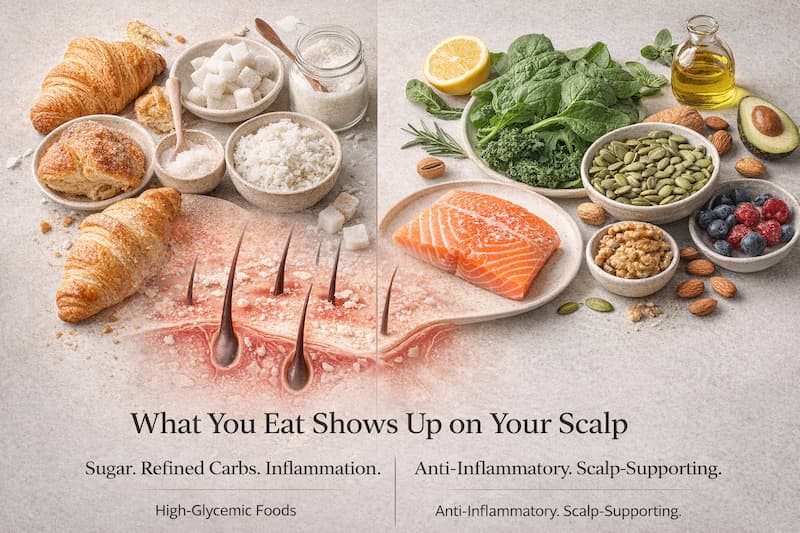
I. Introduction: The Internal Flare-Up Trigger
Most people treat their scalp like it’s separate from the rest of the body. In reality, what you eat can fuel seborrheic dermatitis flare-ups. Your skin reflects what’s happening inside.
If you are tired of temporary fixes like shampoos and masks that only calm the symptoms, it’s time to look at your plate. Nutritional choices can directly trigger inflammation. Each snack, meal, or drink can either calm or provoke your scalp. This article explores the link between diet and seborrheic dermatitis, helping you spot the hidden triggers that make your scalp overreact.
II. The Science of Diet and Seborrheic Dermatitis Flare-Ups
The Gut-Skin Axis
Your intestines and your skin are connected through a communication system called the gut-skin axis. Signals from the gut can affect how your immune system reacts in the skin. If your gut experiences irritation, your scalp responds with redness, itching, or extra flaking.
Systemic Inflammation
High-glycemic foods like sweets and refined carbs spike insulin in the blood. This triggers androgenic activity, which overstimulates your sebaceous glands. More oil on your scalp means a better environment for Malassezia, the yeast behind dandruff and seborrheic dermatitis.
Keywords: Insulin-like growth factor (IGF-1), androgenic activity, sebaceous gland stimulation
III. High-Glycemic Foods in the Diet and Seborrheic Dermatitis Link
Sugar and Sebum
Eating refined carbs sends your body into a mini-firestorm of inflammation. The spikes in blood sugar and insulin lead to more sebum. That extra oil can leave your scalp shiny, itchy, and flake-prone.
The Yeast Connection
High blood sugar changes your skin’s lipid profile. This indirectly supports Malassezia growth. The yeast feeds on the lipids, creating more irritation, redness, and flakes.
Keywords: Refined carbs, glycemic load, lipid peroxidation, cytokine release
IV. Dairy and Other Common Diet Triggers
The Dairy Dilemma
Cow’s milk contains proteins like casein that can trigger systemic inflammation in some adults. This increases your skin’s sensitivity and can worsen flare-ups.
Alcohol and Dehydration
Alcohol doesn’t just dry you out. It depletes B-vitamins that help your scalp repair itself. Low hydration and missing micronutrients weaken the barrier, leaving the scalp vulnerable to irritation.
Keywords: Casein sensitivity, micronutrient depletion, skin barrier fragility
V. Healing the Scalp: The Diet and Seborrheic Dermatitis Protocol
Anti-Inflammatory Essentials
Zinc, Omega-3s, and B-vitamins calm systemic inflammation and support a healthy scalp microbiome. These nutrients reduce redness, regulate sebum, and help the skin defend against flare-ups.
The Harbivaa Holistic Approach
Nutrition alone isn’t enough. Pair internal support with topical care like ScalpRx. Lipid-replenishing oils restore the barrier, protect your skin, and keep the yeast from overgrowing. Together, diet and topical support create a stronger, calmer scalp.
Keywords: Bio-available nutrients, zinc picolinate, omega-3 fatty acids, microbiome diversity
VI. Conclusion: Mastering Your Nutritional Triggers
Diet and seborrheic dermatitis are connected, but everyone’s triggers are different. What irritates your friend’s scalp may not bother you.
Start by identifying your personal triggers. Watch how sugar, dairy, or alcohol affect your flakes. Combine that with barrier support like ScalpRx for best results.
Final Call to Action: Ready to see if your diet is fueling your flare-ups? Take our Scalp Type Quiz to discover your personalized inflammation profile.
- Product: ScalpRx – Functional barrier support while adjusting diet
- Blog: The Root Cause of Seborrheic Dermatitis – Learn how diet, lipids, and yeast interact
Struggling with a sudden flare? Download our 7-Day Scalp Reset checklist to calm it fast.