
The Kitchen Pharmacy: Mastering Natural Treatments for Dry Scalp
The “Salad Dressing” Mistake
Most people treat their scalp like a kitchen experiment. They grab olive oil, coconut oil, or anything labeled “natural,” rub it in, and expect the flakes to disappear. Instead, the scalp feels greasy, irritated, and still dry.
The problem isn’t the idea of natural care. The problem is the mismatch. Many household oils sit on the surface without fixing the real issue water loss and a weakened barrier.
Effective natural treatments for dry scalp works differently. They rely on ingredients that interact well with the skin’s own lipids and moisture system. When botanical oils, humectants, and the scalp barrier align, hydration improves and irritation fades. In modern scalp care, success comes from compatibility, not convenience.
The Molecular Science Behind Natural Treatments for Dry Scalp
Many people assume that “natural” ingredients automatically help the scalp. However, biology is more selective. The success of natural treatments for dry scalp depends on how well an ingredient interacts with skin chemistry.
First, consider molecular weight. Smaller molecules penetrate more easily. Coconut oil, for example, has a relatively low molecular weight. As a result, it can enter the hair shaft and reduce protein loss. However, that same trait can create problems on the scalp. Coconut oil is moderately comedogenic. Therefore, it may clog pores and worsen irritation for some people.
By contrast, squalane behaves differently. This compound is often derived from olives and refined into a stable oil. More importantly, it closely resembles human sebum. Because of this similarity, squalane integrates smoothly into the scalp’s lipid layer. Instead of blocking pores, it reinforces the barrier and reduces moisture loss.
Next comes the pH factor. The scalp operates best within a slightly acidic environment. In most people, the natural range sits between pH 4.5 and 5.5. Within this window, enzymes regulate cell turnover and maintain microbial balance.
Problems begin when “natural” remedies disrupt that balance. Baking soda, for instance, has a very high pH. When applied repeatedly, it strips the acid mantle and weakens the barrier. On the opposite end, undiluted lemon juice is extremely acidic. This can irritate the scalp and trigger inflammation.
Therefore, effective natural treatments for dry scalp focus on pH-balanced botanicals. Ingredients should support the acid mantle rather than fight it. When molecular size and pH compatibility align, the scalp absorbs moisture more easily and irritation declines.
Key Natural Ingredients: The “Holy Trinity” of Relief
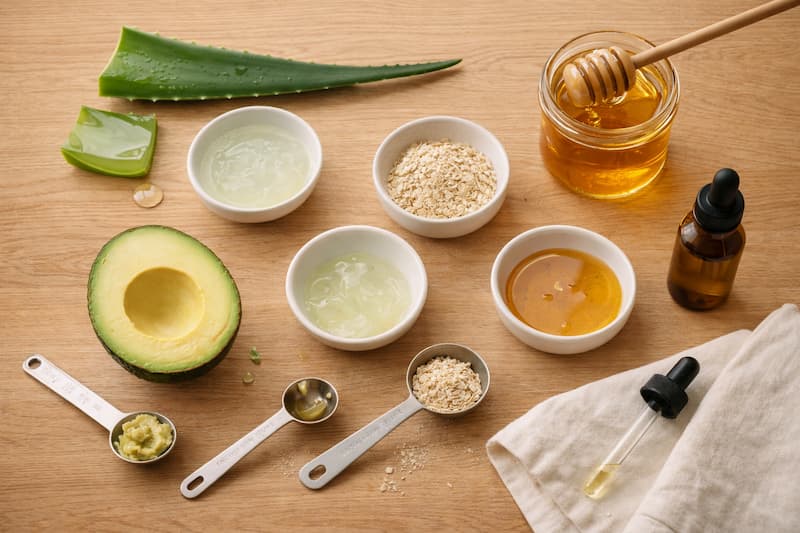
Not all botanicals perform equally. Some ingredients support hydration, while others reinforce the lipid barrier. The most effective natural treatments for dry scalp combine both actions.
Three ingredients consistently deliver results.
Aloe Vera – The Hydrator
Aloe vera does far more than cool the skin. Its gel contains proteolytic enzymes that help remove damaged cells from the surface layer. At the same time, its polysaccharides bind water and support hydration.
As a result, aloe softens flakes while calming inflammation. When applied to a damp scalp, it helps restore moisture without leaving a heavy residue.
Raw Honey – The Humectant
Raw honey functions as a natural humectant. In simple terms, it attracts moisture from the surrounding air. This property allows honey to pull water toward the scalp surface and keep cells hydrated.
In addition, honey contains mild antimicrobial compounds. These help maintain a balanced scalp environment while supporting barrier recovery.
Avocado Oil – The Lipid Repairer
Avocado oil completes the trio. It is rich in oleic acid, a fatty acid that reinforces damaged lipid layers. Once applied, the oil fills microscopic gaps between scalp cells.
This process reduces moisture loss and improves flexibility in the skin barrier. Consequently, dryness and tightness decline over time.
While topical application plays a major role, internal nutrition still matters. These ingredients perform best when supported by a diet rich in hydrating foods and micronutrients. For that reason, many people combine topical care with guidance on hydrating foods for scalp health to reinforce the barrier from within.
Evidence-Based Benefits: Why Nature Works in 2026
Natural care has evolved beyond folklore. Today, many natural treatments for dry scalp are supported by dermatological research.
Take chamomile as an example. This plant contains bisabolol, a compound known for its anti-inflammatory effects. When applied to the scalp, bisabolol helps calm irritation and reduce redness. As inflammation decreases, the barrier begins to recover.
Aloe contributes another important group of compounds: polysaccharides. These long carbohydrate molecules support hydration and tissue repair. They also form a light protective film that helps prevent water from escaping the skin.
Together, these plant compounds create a gentle but effective treatment system. Unlike many synthetic formulas, botanicals often work without heavy fillers or harsh preservatives.
Still, topical products cannot work alone. The scalp also depends on internal nutrients that support cellular repair. Vitamins and minerals act as co-factors for enzyme activity inside the skin.
For example, certain B vitamins support keratinocyte turnover. Zinc contributes to barrier repair and immune balance. Without these nutrients, even the best topical formulas struggle to deliver lasting results.
For that reason, long-term success often combines topical care with nutritional support. Many people benefit from understanding which vitamins for dry scalp help activate these natural treatments at the cellular level.
When external botanicals and internal nutrients work together, the scalp shifts from constant irritation toward steady recovery. Over time, hydration stabilizes, flakes diminish, and the barrier regains strength.
Full Routines: Implementing Natural Treatments for Dry Scalp
Effective natural treatments for dry scalp work best within a simple routine. Each step prepares the scalp for the next. As a result, hydration penetrates deeper and remains longer.
Start with a gentle preparation phase.
1. The Gentle Warm-Up
First, soften the flakes.
Soak a clean towel in warm water. Then wring it out until damp.
Place the towel over the scalp for three to five minutes.
This warmth loosens the “flake glue” that binds dead cells together. Consequently, the surface layer becomes easier to treat.
2. The Humectant Infusion
Next, apply your hydration base.
Use aloe gel or diluted raw honey. Spread a thin layer directly onto the scalp. Then massage lightly with your fingertips.
Humectants attract water toward the skin. Therefore, they help restore hydration inside the outer barrier layer.
Leave the mixture on the scalp for ten to fifteen minutes. During this time, the ingredients pull moisture toward the skin surface.
3. The Occlusive Lock
Finally, seal the hydration.
Apply a very small amount of jojoba oil or squalane. These oils mimic the skin’s natural lipids. As a result, they help trap the moisture delivered during the infusion step.
Use only a thin layer. Too much oil may block follicles and slow absorption.
When practiced consistently, this routine supports stable barrier repair. However, beginners often benefit from a structured schedule. For that reason, many readers transition from these raw ingredients into a more organized home dry scalp treatment guide that balances weekly care.
The 0.01% Expert Warning: Natural Traps to Avoid
Natural ingredients can support scalp health. However, misuse can create irritation instead of relief. Therefore, careful dilution and moderation are essential when using natural treatments for dry scalp.
The Essential Oil Hazard
Essential oils are highly concentrated plant extracts. Because of this potency, they must never be applied directly to the scalp.
Dermatology guidelines often follow the 1% rule. This means adding one drop of essential oil to one teaspoon of carrier oil.
Tea tree oil and peppermint oil are common examples. When diluted correctly, they may help reduce irritation and microbial imbalance. Yet when applied undiluted, they can cause burning or redness.
Always mix essential oils with carriers such as jojoba, squalane, or sweet almond oil before application.
The Vinegar Trap
Apple cider vinegar is another popular remedy. Many people use it to rebalance scalp pH. However, improper dilution can damage the acid mantle.
The safe ratio is one part vinegar to ten parts water. This creates a gentle rinse that supports pH balance without harming the barrier.
Anything stronger risks chemical irritation, especially on a compromised scalp. Therefore, dilution remains essential when working with acidic ingredients.
By following these precautions, natural remedies remain supportive rather than disruptive.
Conclusion: From Kitchen Remedies to Scalp Stability
Using natural treatments for dry scalp brings scalp care back to simple, biological principles. Gentle hydration replaces harsh stripping, while botanical lipids support the barrier rather than overwhelming it with synthetic occlusives.
Over time, removing aggressive fragrances and “savage” cleansers allows the scalp to rebalance. As a result, the “Invisible Fire” of itching declines and the cycle of flaking becomes less frequent. This shift restores the scalp’s natural repair system; instead of suffering through constant irritation, the skin begins to regulate its own moisture and oil production with clinical precision.
To transition from temporary relief to a lifetime of dermal resilience, discover the essential daily habits that naturally hydrate your scalp and lock in moisture without the need for heavy topicals.
For a practical reference, download the 39-page PDF strategy guide featuring the Botanical Cheat Sheet. The guide lists the exact $pH$ ranges and dilution ratios for common kitchen ingredients used in professional-grade scalp care.