
The Dermal Flood: A Step-by-Step Guide to Rehydrating a Dry Scalp
Why Your Scalp Is “Thirsty,” Not “Oily”
Picture a wilted plant struggling for water. Now imagine coating its leaves with candle wax. The plant would suffocate instead of recover. The same mistake happens when thick oils are applied to a dehydrated scalp. Oils seal the surface, yet they do nothing to replace the water your skin is lacking.
Rehydrating a dry scalp starts with restoring moisture, not covering the problem. Modern scalp care focuses on rebuilding the skin’s Natural Moisturizing Factors (NMF) the compounds that hold water inside the barrier. That is why many experts now rely on a method called Dermal Flooding, a hydration-first approach designed to refill the scalp with water before sealing it properly.
The Biological Blueprint for Rehydrating a Dry Scalp
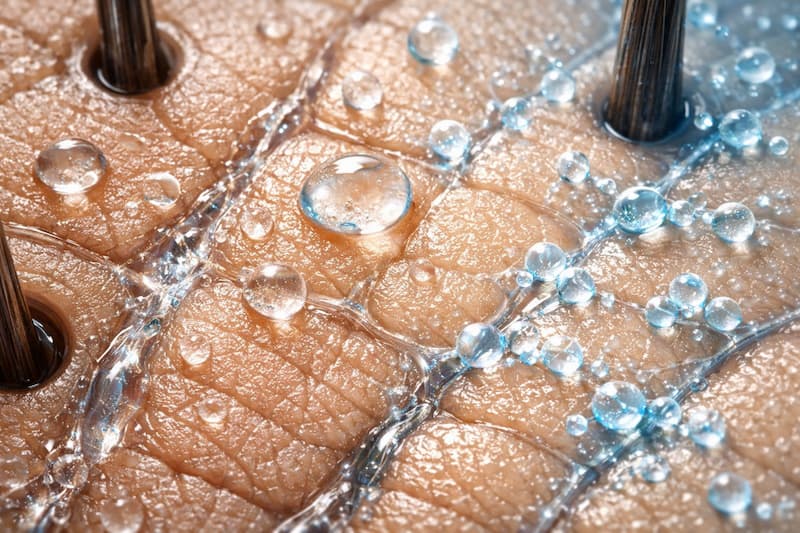
Rehydrating a dry scalp starts with understanding the stratum corneum, the outer barrier that protects your skin. This layer acts like a brick wall. The skin cells are the bricks, while lipids form the mortar that keeps everything sealed.
When the barrier weakens, water escapes through a process known as transepidermal water loss (TEWL). As a result, the scalp becomes tight, flaky, and irritated. At this stage, oils alone cannot fix the problem.
Instead, your scalp needs humectants first. These ingredients act like water magnets. They pull moisture into the cells and restore internal hydration. Key humectants include compounds that support the skin’s Natural Moisturizing Factors (NMF).
Once hydration improves, keratinocytes the living skin cells in the barrier begin functioning normally again. Consequently, the scalp regains flexibility and resilience. After this stage, barrier lipids can seal the moisture and stabilize the repair process.
The Step-by-Step Plan for Rehydrating a Dry Scalp
Rehydrating a dry scalp works best when you follow a simple sequence. Each step prepares the barrier for the next stage of repair.
1. Pre-Rinse
Start with lukewarm water. This softens the adhesive “glue” between dead skin cells. As a result, flakes loosen without aggressive scrubbing.
2. The Humectant Flood
Next, apply a humectant to a fully damp scalp. Aloe vera gel or hyaluronic acid works well. Because the scalp is wet, these ingredients pull water directly into the skin.
3. The Active Treatment Window
After hydration begins, the barrier becomes more receptive. This is the ideal moment to apply targeted treatments.
For the best results, perform your dry scalp mask application during this stage so the active ingredients can reach deeper layers of the dermis.
4. The Lipid Seal
Finally, lock the hydration in place. Use a small amount of lightweight lipids such as squalane or jojoba. These oils mimic natural scalp lipids, helping prevent water loss without clogging the skin.
Together, this sequence forms the Dermal Flooding technique a structured method for step-by-step scalp repair.
Common Challenges When Rehydrating a Dry Scalp
Sometimes the scalp becomes itchier after hydration. This reaction can feel confusing. However, the cause is usually technical rather than harmful.
One common trigger is pH imbalance. If the product used is too alkaline, it can disrupt the acid mantle. Consequently, the barrier struggles to stabilize.
Another frequent issue is hard water buildup. Minerals like calcium and magnesium leave deposits on the scalp. Over time, these deposits block moisture absorption and create irritation.
In these cases, small adjustments often solve the problem.
- Use pH-balanced products designed for scalp care.
- Consider a gentle chelating rinse if mineral buildup is suspected.
- Reduce product layering until irritation settles.
However, some symptoms signal a deeper barrier problem. If your scalp feels painful, cracked, or “weeping,” basic hydration routines may not be enough.
In that situation, it may be necessary to fix an extremely dry scalp using clinical-grade treatments before returning to this maintenance routine.
The 0.01% Expert “Water-First” Checklist
Rehydrating a dry scalp works best when the basics are correct. Small mistakes often block moisture from entering the barrier. For this reason, experts run a quick scalp hydration audit before adjusting products.
Use this checklist to evaluate your routine.
Scalp Hydration Audit
- Is your water temperature under 100°F?
Hot water strips barrier lipids. In contrast, lukewarm water protects the scalp while allowing hydration to penetrate. - Are you applying treatments to fully wet skin?
Humectants perform best on wet surfaces. When applied to damp skin, they pull limited moisture into the barrier. However, when the scalp is wet, hydration delivery improves dramatically. - Are you avoiding alcohol-based toners?
Many toners contain fast-evaporating alcohols. Initially, they feel refreshing. Over time, they increase dryness and irritation.
If one of these answers is “no,” start there first. Often, correcting a single habit restores non-irritating moisture and improves the entire routine.
From Rehydration to Fortress Defense
Rehydrating a dry scalp marks the first stage of barrier recovery. Once the cells regain water, the scalp softens. Gradually, itching fades. Soon after, visible flakes begin to disappear.
At this point, the environment around each follicle stabilizes. Consequently, hair growth occurs in calmer, healthier conditions.
However, hydration alone does not maintain long-term stability. The next step is retention and protection.
To extend the results, explore our increase moisture in scalp techniques. These methods focus on long-term water retention inside the barrier. Then continue with our guide on stopping dry scalp for good , where the focus shifts from repair to defense.
For a structured routine, download the 39-page PDF strategy guide featuring the Dermal Flooding Routine. The guide outlines the exact product-stacking order used for fast 15-minute hydration relief.