
Scalp Red Flags: When to See a Dermatologist vs. Home Care
After weeks of ignoring subtle changes, you notice it: a persistent itch, a patch of redness, a slight swelling along the hairline. Anxiety spikes. Your scalp feels unfamiliar. Not every irritation is serious, but some signals deserve attention. Knowing scalp red flags separates manageable issues from urgent ones.
A controlled, 5-day barrier reset often serves as the first diagnostic tool. It clarifies whether irritation stems from your routine or something more systemic. In many cases, this step alone prevents unnecessary medication. However, awareness of key red flags is essential for timely intervention.
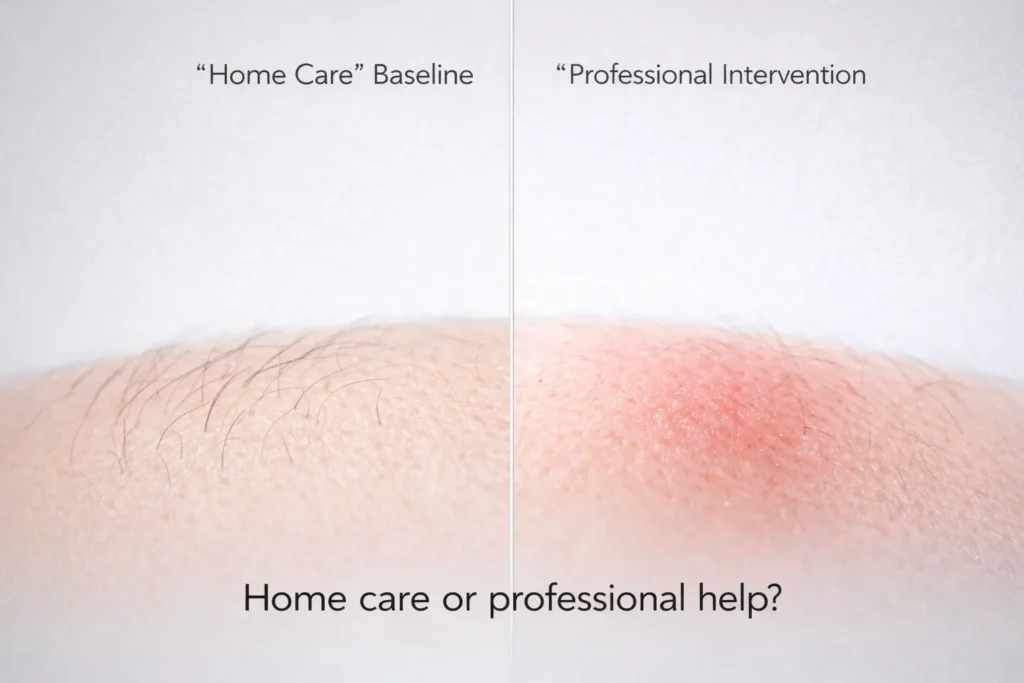
Persistent Inflammation: The Most Subtle Scalp Red Flags
Redness that lingers beyond a wash or two is rarely benign. If your daily routine, cold compresses, and gentle cleansers fail to calm the scalp, the issue may extend deeper. Chronic cytokine activity keeps the scalp in a heightened inflammatory state.
Over days, the barrier weakens. Sebum distribution becomes irregular. Hair follicles remain stressed. This prolonged reaction can indicate autoimmune involvement or systemic inflammation rather than simple topical irritation.
Before reaching for drastic solutions, check your habits. Scalp red flags often manifest differently depending on the trigger. A structured daily routine can help distinguish minor irritation from medical concern. Learn the red flags in your habits here.
Infection and Oozing: Critical Scalp Red Flags
Some signs require urgent attention. Yellow or honey-colored crusting, pus-filled bumps, localized swelling, or heat along the scalp are not minor. They often indicate Staphylococcus aureus colonization or another bacterial breach.
These scalp red flags represent a compromised primary immune barrier. Topical oils or home remedies cannot resolve the infection. Medical intervention, including antibiotics, is necessary. Recognizing these signs early prevents more serious follicular damage.
Patchy Hair Loss: Scalp Red Flags You Can’t Ignore
Shedding occurs in cycles, but abrupt or localized loss signals deeper issues. Distinguishing between stress-related Telogen Effluvium and scarring Cicatricial Alopecia is critical.
Shiny, smooth skin where hair once grew indicates follicle fibrosis. This is one of the most time-sensitive scalp red flags. Acting promptly can prevent permanent loss.
If your scalp feels tight but hair is intact, start with a full 5-day reset guide. Simple barrier repair sometimes resolves tension before professional intervention is needed. Try the reset before seeking help.
Comparing Home Care vs. Clinical Intervention
| Symptom | Try the 5-Day Reset If… | See a Dermatologist If… |
|---|---|---|
| Redness | Appeared after a new product | Persistent, hot, or spreading |
| Flaking | Dry, small, white flakes | Thick, silver, or bleeding |
| Itching | Post-wash tightness | Keeps you awake at night |
| Hair Loss | Overall thinning | Distinct smooth patches |
This framework helps triage what you can manage at home versus what demands professional assessment. The reset serves as a controlled experiment, giving clinicians precise history if escalation is required.
Conclusion: The “Reset First” Philosophy
Most dermatologists will initially recommend stripping routines back to basics. A 5-day scalp reset documents what fails and what works, avoiding unnecessary treatments.
Immediate action isn’t always aggressive intervention. Recognize scalp red flags, start controlled home care, and gather clear evidence for your provider if problems persist.
Download the full 5-day scalp reset guide for step-by-step relief. Rule out product irritation, regain control, and approach scalp health safely and deliberately.