
Looking Beneath the Flakes: Understanding Seborrheic Dermatitis Causes
Understanding the true seborrheic dermatitis causes is the first step to stopping the cycle of temporary fixes.
For years, the conversation focused only on surface-level fungus, but that approach misses the bigger picture.
Modern research shows that these causes are deeply rooted in both your biology and your environment.
To truly address the issue, you need to look beneath the flakes and target the source.
The Biological Foundation of Seborrheic Dermatitis Causes
Everyone has Malassezia yeast on their scalp, yet only some people develop flare-ups.
So, why do some scalps overreact while others stay calm?
The key is your host-response mechanism.
When your immune system identifies oleic acid (a byproduct of yeast metabolism) as a threat, it triggers inflammation.
This overreaction is often more harmful than the yeast itself.
At a technical level, Toll-like receptors (TLRs) detect breaches in your skin barrier.
They signal the immune system, setting off a cascade of cytokines that accelerate skin cell turnover.
This rapid turnover produces the flakes you see, but the underlying cause is immune hyperreactivity.
Lipid Imbalance as a Primary Cause
Your scalp oil, or sebum, isn’t always perfectly balanced.
The ratio of triglycerides to free fatty acids matters because dysfunctional oil fuels inflammation.
When this balance is off, your scalp becomes a playground for Malassezia.
A leaky scalp barrier worsens the problem.
The stratum corneum—the outermost skin layer—should block irritants, but when compromised, things like yeast metabolites and environmental toxins penetrate deeper than they should.
This imbalance also disrupts the acid mantle, reducing your scalp’s natural protection.
Without proper lipid barrier repair, your skin remains sensitive, reactive, and prone to epidermal permeability issues.
Systemic Factors and Seborrheic Dermatitis Causes
Seborrheic dermatitis isn’t just skin-deep; internal factors play a major role.
The Gut-Skin Connection
Your gut health influences your scalp through systemic inflammation.
When intestinal permeability (leaky gut) increases, inflammatory compounds enter the bloodstream and aggravate the scalp.
This explains why some flare-ups don’t improve with topical treatments alone.
Hormonal Influence
Androgens drive sebum production.
Excess oil feeds yeast and worsens inflammation.
Stress also elevates cortisol levels, further influencing sebum composition and triggering more reactive skin.
Maintaining microbiome balance internally is as important as external care.
Addressing systemic inflammation reduces the intensity of seborrheic dermatitis flare-ups.
How Environmental Stressors Fuel Causes
External factors amplify internal vulnerabilities.
The Hard Water Factor
Minerals like calcium and magnesium build up on the scalp.
This disrupts pH and traps yeast against the skin, creating a breeding ground for inflammation.
Even if your barrier is healthy, constant mineral exposure increases flare frequency.
Surfactant Damage
Harsh detergents and sulfates strip protective lipids from your scalp.
This leads to surfactant-induced irritation, weakening the barrier and triggering another cycle of flaking.
Maintaining pH balance is essential for preventing these secondary causes.
Solving the Seborrheic Dermatitis Causes Protocol
Addressing seborrheic dermatitis requires a multi-layered approach.
Step 1: Barrier Restoration
Replenish missing lipids using ScalpRx.
These biomimetic lipids restore the acid mantle and strengthen the stratum corneum.
A healthy barrier reduces the immune system’s overreaction to Malassezia.
Step 2: Microbiome Stabilization
Instead of trying to kill yeast, focus on creating a balanced environment.
A stabilized microbiome encourages Malassezia to act as a commensal—a “good neighbor” rather than a trigger for inflammation.
This reduces the frequency and severity of flare-ups.
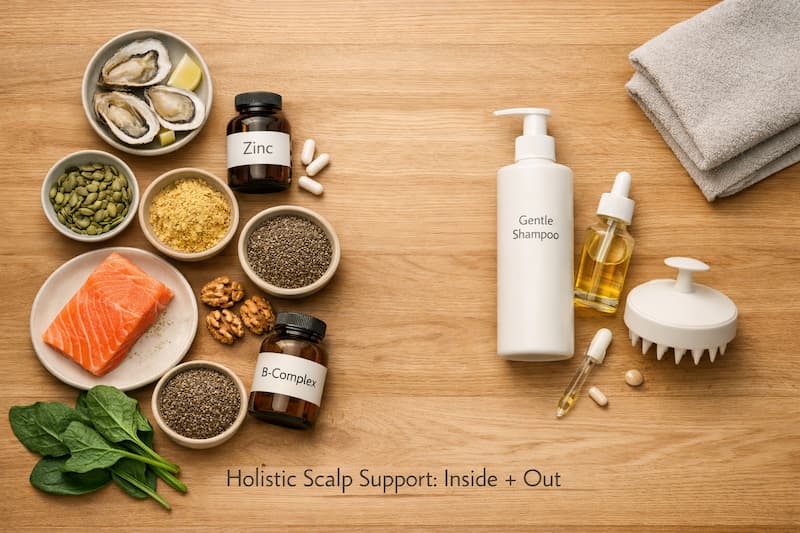
Step 3: Internal Support
Nutritional gaps often worsen seborrheic dermatitis.
Support your scalp with vitamins, minerals, and anti-inflammatory foods that strengthen barrier function.
A holistic approach ensures the root causes—both internal and external—are addressed.
Moving Toward Scalp Mastery
Seborrheic dermatitis causes are complex, but identifying them is crucial for long-term relief.
Temporary fixes only mask the problem, while barrier-first care, microbiome support, and internal nutrition address the root.
Recovery is a journey, not a sprint.
By understanding your unique triggers and taking consistent steps, you can reduce flare-ups and reclaim scalp health.
Next Step: Ready to identify your specific triggers?
Take the Scalp Type Quiz for a personalized assessment and start building a routine tailored to your scalp’s needs.
For further reading, check out The Root Cause of Seborrheic Dermatitis to understand how lipids and yeast interact.
Meanwhile, pair internal care with ScalpRx to protect and restore your barrier from the outside in.
With this approach, your scalp stops reacting so dramatically, your flakes reduce, and long-term scalp mastery becomes possible.