
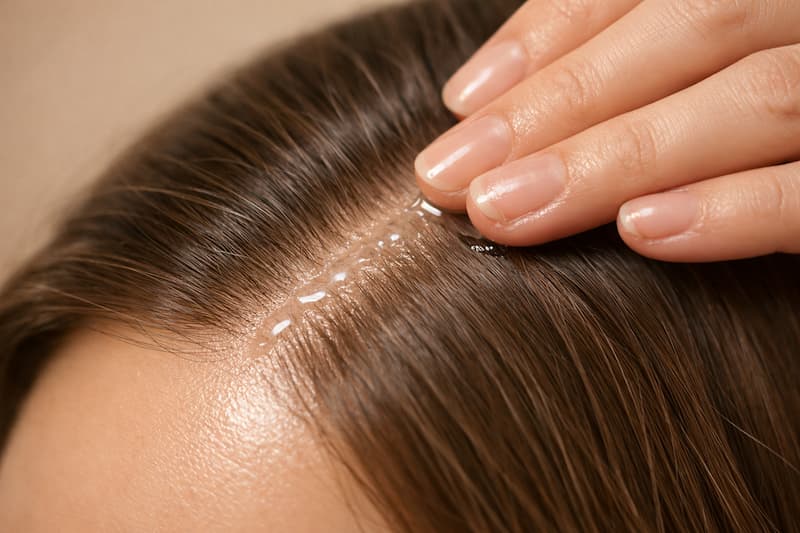
A seborrheic dermatitis flare up is more than just annoying.
It’s your scalp screaming that its defense system is overwhelmed.
Most people grab harsher shampoos at the first sign of flakes.
However, this only triggers a rebound effect, making the next flare worse.
To truly break the cycle, you need to understand why sensitive skin reacts so quickly but heals so slowly.
Chronic scalp irritation isn’t random.
It happens because your skin’s inflammatory response is out of balance.
At the same time, barrier-first healing is often ignored.
The Biology of a Seborrheic Dermatitis Flare Up
Your scalp reacts instantly.
Itch signals travel through nerves in seconds.
However, recovery is much slower.
Rebuilding lipid layers in the stratum corneum can take 28 days or more.
This is why the flare-up feels immediate, yet your scalp remains fragile for weeks.
Acid Mantle Breakdown
When the pH balance of your scalp is disrupted, flare-ups thrive.
The protective acid mantle loses integrity.
Transepidermal water loss (TEWL) increases.
Meanwhile, Malassezia yeast finds the perfect environment to overgrow.
Your scalp becomes reactive and easily irritated.
The symptoms return faster than the barrier can repair.
How Over-Treatment Triggers a Seborrheic Dermatitis Flare Up
Many people think scrubbing more will help.
Instead, mechanical or chemical over-exfoliation creates micro-tears in your scalp.
The “Scrubbing” Fallacy
When you scrub during a flare-up, you damage your barrier.
The result is contact dermatitis and worsening irritation.
Even gentle brushing can backfire if the scalp is inflamed.
Surfactant Sensitivity
Harsh sulfates, like SLS, strip your scalp of lipids.
This makes the flare worse instead of better.
Aggressive cleansing also triggers rebound oiliness, which feeds Malassezia.
So even “strong” anti-dandruff shampoos can backfire during a flare-up.
Why Slow Recovery Lengthens a Seborrheic Dermatitis Flare Up
Symptoms might vanish, but vulnerability often remains.
This is the hidden stage of a flare-up.
The Healing Horizon
Your scalp still needs lipid replenishment.
Cellular turnover continues, and keratinocytes are still maturing.
The barrier is fragile even if flakes disappear.
During this time, stress, temperature changes, or even minor products can trigger another flare.
Patience is essential because rushing recovery only prolongs the cycle.
Post-Inflammatory Fragility
Invisible weakness in your scalp prolongs flare-ups.
You might feel fine, but the underlying barrier is still compromised.
This is why long-term remission requires more than stopping flakes—it needs barrier-first care.
The Barrier-First Protocol to End the Flare
A flare-up ends when you stop attacking the skin.
Instead, nurture the barrier while supporting natural recovery.
Step 1: Bio-Compatible Soothing
Use ingredients that mimic natural skin lipids.
Products like ScalpRx work because they strengthen the barrier without irritation.
They reduce inflammation and calm nerve signaling.
Step 2: Tactical Washing
Reduce washing frequency during flare-ups.
Lower water temperature preserves the acid mantle.
Gentle, non-stripping cleansers protect the barrier while removing buildup.
Step 3: Environmental Protection
Hard water, pollution, and harsh climates can trigger flare-ups.
Use filters, protective oils, or barrier creams.
By controlling these factors, your scalp has a better chance to recover.
Patience as a Clinical Tool
Healing takes time, but the results last.
Resist the urge to “attack” your scalp.
Instead, focus on nurturing the barrier.
By following a barrier-first protocol, you reduce skin reactivity.
You also support holistic recovery and sustainable results.
Your Next Step
Done with constant flare-ups?
Take the Scalp Type Quiz to build a routine that respects your scalp’s recovery time.
For deeper understanding, check out The Root Cause of Seborrheic Dermatitis to see how lipids and yeast interact.
Meanwhile, pair internal care with ScalpRx for a gentle, barrier-first approach to long-term remission.
With patience and the right steps, your scalp can finally master itself.
Flakes stop being the boss, and you regain control.