
Does Your Winter Wash Routine Secretly Cause Flakes?
Fix Cold Weather Scalp Dryness. Learn why winter strips lipids and adopt our expert 3-step Winter Wash Routine for instant relief.Table of Contents
- Introduction: When Cold Weather Triggers Flakes
- Section 1: The Biology of the Freeze
- Section 2: Why Winter Tightness Happens
- Section 3: The Best Winter Wash Routine
- Conclusion: Winter-Proofing Your Ecosystem
Introduction: When Cold Weather Triggers Flakes
The moment temperatures drop and indoor heating switches on, your scalp changes fast. Tight. Itchy. Rigid. That uncomfortable pull after washing isn’t random. It’s cold weather scalp dryness, and it follows a predictable pattern every winter.
This isn’t basic dry skin. Cold air holds little moisture. Heated indoor air holds even less. Together, they create a moisture vacuum that pulls water straight out of your scalp. As hydration drops, protective lipids break down. Once those lipids disappear, the barrier cracks.
This article explains the biology behind winter scalp barrier damage and outlines a winter wash routine that protects lipids instead of stripping them.
Section 1: The Biology of the Freeze: How Winter Destroys the Barrier
The Humidity Vacuum and TEWL
Winter creates a moisture imbalance your scalp can’t defend against. Cold outdoor air and indoor heating lower humidity sharply. Your scalp loses water to the environment through transepidermal water loss (TEWL).
As water escapes, essential lipids leave with it. Those lipids keep the barrier sealed and flexible. Once depleted, microscopic cracks form. Irritants enter. Nerves react. Tightness and itch follow.
The Hot Water Paradox
Cold weather pushes longer, hotter showers. That comfort comes at a cost. Hot water melts sebum and dissolves the lipid matrix on contact. This lipid stripping leaves the barrier exposed just as you step back into dry air.
The result is moisture loss during washing followed by rapid evaporation after. This is one of the biggest winter shower mistakes.
Section 2: Decoding the Symptom: Why Tightness Happens
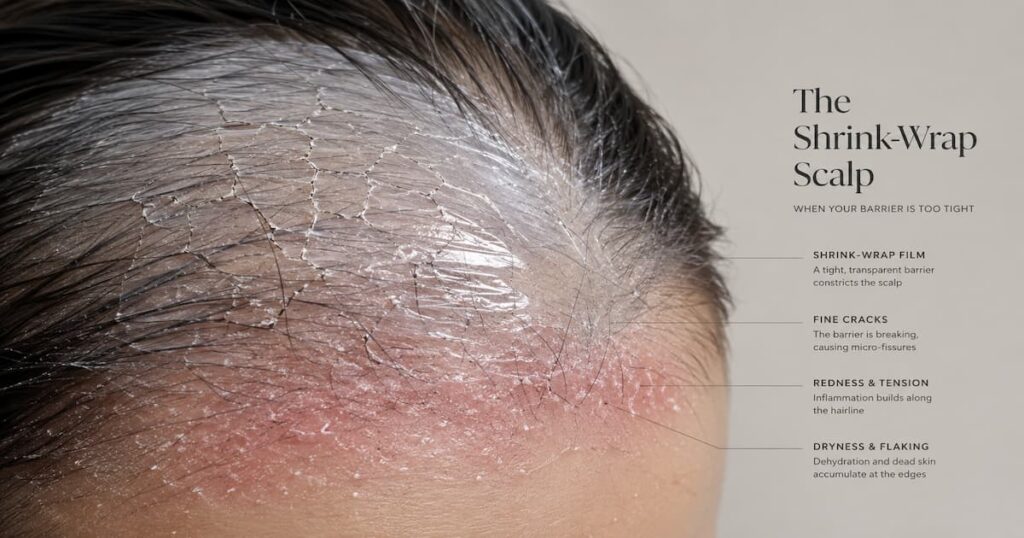
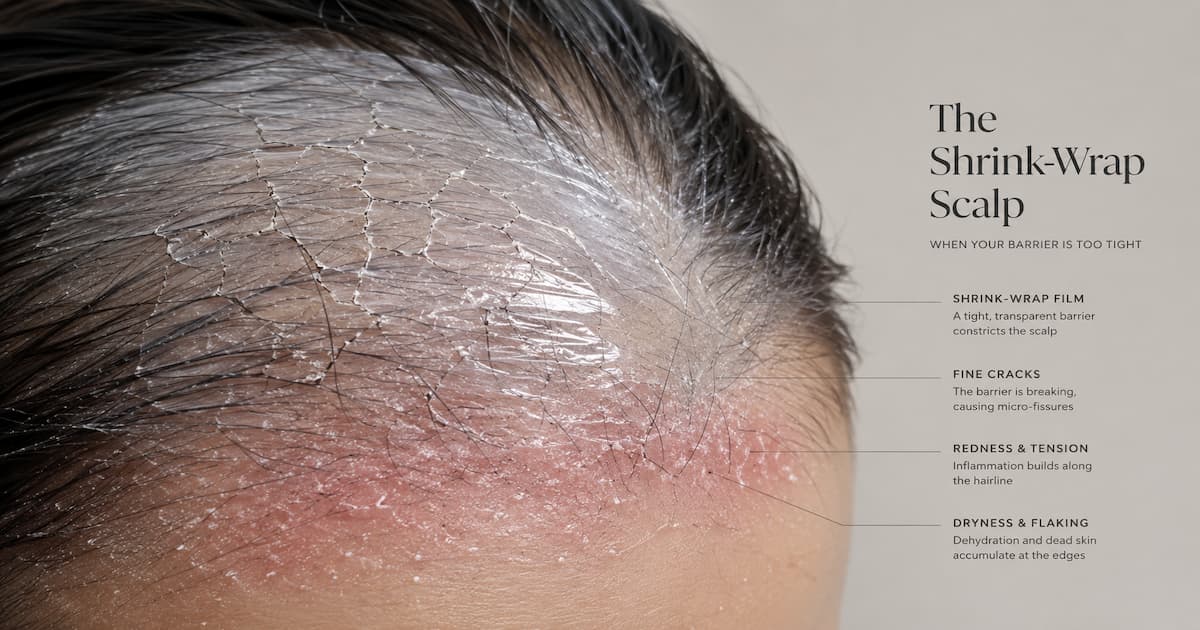
The Shrink-Wrap Effect
A healthy scalp moves easily. In winter, lipid loss changes that fast. The stratum corneum dries, stiffens, and contracts. This creates a shrink-wrap effect.
As the surface tightens, it pulls on nerve endings. That pulling registers as pressure or pain. This explains why your scalp feels tight after washing in winter, even when flakes are mild.
Micro-Inflammation and Itch
When lipids drop, microscopic cracks open in the barrier. Fragrance, surfactants, and airborne particles slip through.
The scalp responds with low-grade inflammation. Nerves become hypersensitive. Itch, stinging, and crawling sensations follow.
Section 3: The Protocol: The Best Winter Wash Routine for Dry Scalp
Step 1: The Pre-Wash Lipid Buffer
Start before water hits your scalp. Apply a light biomimetic oil 15 minutes pre-wash.
Use jojoba or squalane. These mimic natural sebum and reduce lipid loss during cleansing.
Step 2: The Cream Cleanser Switch
In winter, clarifying shampoos strip too much. Switch to a cream-based cleanser.
Look for colloidal oatmeal, aloe, or glycerin. Skip strong sulfates. This allows cleansing without dissolving the lipid matrix.
Step 3: The Post-Wash Seal
Act fast after rinsing. While the scalp is damp, apply a leave-in.
Ceramides repair gaps between cells. Hyaluronic acid binds water and slows evaporation.
Conclusion: Winter-Proofing Your Ecosystem
Cold weather scalp dryness follows a predictable biological pattern. Low humidity, hot water, and lipid loss weaken the barrier. Tightness, itch, and flakes follow.
The fix isn’t harsher cleansing. It’s lipid protection. Adjusting how you wash and how you seal moisture keeps your scalp stable through winter.
Start today. Check your water temperature before your next wash. Then download our Winter Scalp Survival Checklist.